The Solidarity Movement plays a constructive role – a response to Max du Preez

Max du Preez peppers his scathing attack on Solidarity and AfriForum with liberal quantities of loaded terms such as “hardcore nationalist,” “right-wing,” “fundamentalist ideologue,” and more.

Apartheid and accusations of racism are the final trump cards that are played against an Afrikaner organisation once all the other cards have been exhausted.

We will not be intimidated by false accusations that try to silence us when we attempt to protect the human rights and interests of South-Africans, including Afrikaners.

The motivation behind the Solidarity Movement’s “we will do it ourselves, and we will do it together” strategy, is an honest attempt to work with our fellow citizens in a spirit of mutual recognition and respect, to make South Africa a better place for all. The core of our culture remains ’a Boer makes a plan’.

We certainly do not long for the past under apartheid, but neither do we look forward to the future under the ANC.

Ever since I was a student, I have therefore sought a third way as an alternative to apartheid on the one hand, and a country dominated by a revolutionary movement with totalitarian tendencies on the other. As a Christian democrat, I advocated, following the example of Conrad Adenauer, a federal model as a third way for South Africa, as it safeguards freedom for all much better.

Misinformation

Like the ANC’s Secretary-General, Du Preez blames our “misinformation” for the deterioration in relations between South Africa and the United States, even though he knows that several media houses have had to apologise to us for falsely claiming that we made allegations of a “genocide”.

In the process, Du Preez ignores the fact that the ANC government is responsible for the diplomatic dispute due to its foreign policy and certain race-based policies that hamper economic growth and job creation while contributing to racial polarisation. Secondly, he disregards Solidarity and AfriForum’s efforts to persuade American decision-makers, using factual information, not to punish the country with tariffs, sanctions, and exclusion from AGOA simply because they disagree with the ANC.

These efforts, undertaken in the national interest, have repeatedly been undermined by ANC leaders through their continued and unnecessary actions against US interests.

Our engagement with the Trump administration is not based on taking their political side against the South African government. It is, however, in South Africa’s national interest to maintain good relations with the US government, as well as other countries. The ANC government’s long-standing neglect of these relationships compelled us, out of patriotism for the country, to intervene despite our differences with the ANC.

It is also our democratic right to inform the international community when the ANC breaches the 1994 settlement, for example, through attacks on Afrikaans schools and race-based legislation.

Fire brigade

AfriForum runs around 100 projects nationwide every day to make the country a better place by improving municipal services, repairing roads, combating crime through neighborhood watches, and upholding the rule of law. These projects may serve Afrikaner interests, but they also serve the broader public interest. We cannot provide all state services without state revenue. The ANC is elected, paid, and funded through our taxes to deliver public services. We are criticized for creating a so called parallel state, yet no alternative is offered for what we are supposed to do when the ANC allows one public service after another to collapse.

Voters who, despite the rotten and corrupt government under which they suffer, repeatedly vote for the same party become accomplices rather than victims. We therefore welcome polls indicating that increasing numbers of historic ANC voters wish to free themselves from their former party.

Nor is it clear what Max’s proposal is when Afrikaners are excluded, based on race, from services for which they pay taxes. He complains more loudly about the siren of AfriForum and Solidarity’s fire engine than about the radical arsonists who are governing the country into ruin while looting it.

Let me put it bluntly: the ‘Maxists’ helped propagate the Marxists into power, and now they stand astonished at the foreseeable consequences, and are angry with us for attempting to halt the decline and implement practical rebuilding plans. The anti-apartheid industry, which previously protested loudly against the former oppressive racial dispensation, is now deathly silent about the failed racial system that replaced it in the name of redress. Basic mathematics shows that laws against 5% young whites cannot improve the chances of 95% young black people.

Normality

Our Movement does not have an evil plan to revive the past, but rather a plan to create a normal future. We simply want what the people of the Western Cape, from where Max safely writes, already have: functioning towns, an effective civil service, safety, a say in matters that affect us, good race relations, and the political, economic, and cultural freedom to live our lives as we see fit, without endless race laws and a government ruling against us.

We are not simply asking for fair rulers; we know that greater freedom is a prerequisite for normality. We do not experience it as a democracy when Mr Panyaza Lesufi, with only around 34% of the ANC vote in Gauteng, effectively holds 100% of the power over Afrikaans schools.

Demographic democracy

South Africa is not merely a country of isolated individuals that can easily be governed by a central government with a standardised policy. Credible opinion polls show that it is a country of many languages and cultures, rather than four races or a single South African identity.

This heterogeneous population has survived various governments and dispensations and is far too complex to be governed through a simplistic majoritarian system. For roughly three decades, South Africa has been a demographic democracy in which people vote more according to identity than policy. The overwhelming majority of voters do not ask: “What does my party believe?” but rather: “Who is my party?”

Voting behaviour is not similar to consumer behaviour, in which people shift their support to the best product or service. This is not unique to South Africa. It is therefore good news for freedom and democracy that the ANC has been forced into a GNU at national level, and that the upcoming local government elections are likely to produce more coalitions that may hopefully save many towns and cities from decline.

Realities

Naturally, I hope that the majority of voters will vote the ANC out of power in the near future. But hope is not a strategy, and we must work with realities rather than wishes.

As David Welsh warned: “The comparative evidence from divided societies does not offer much support for the view that the salience of ethnic or racial identities will eventually give way to voting alignments that are shaped more by, say, class, interests or ideology.”

This does not mean that I have lost hope in democracy. For democracy to be sustainable, however, a dispensation must meet the conditions required for democracy. One important condition is cultural freedom, because democracy without cultural freedom generally amounts to freedom only for the demographic majority. We do not want special favours, but we do not want to plead forever on our knees for cultural rights and -room that are in the constitution.

Weather bureau

If Max genuinely believes that we welcome racial polarisation and the failure of South Africa, then he believes many other strange things as well. A single look at the country’s population composition, economy, divisions, and political realities clearly shows that good race relations and a functioning country are in everyone’s interest. Fortunately, although political relations may be poor, good personal relationships between people remain strong.

Max is correct that I began my career at the far-right Mine Workers’ Union (MWU). That is precisely why my colleagues and I transformed the organisation into a mainstream Christian-democratic movement.

It is also true that we did not believe the ANC would govern the country as successfully as, for example, Botswana has been governed. A thorough study of ANC policy convinced us that the party still clings to an outdated ideology with which it cannot successfully govern a country with such a large modern sector.

We concluded that, due to history, Afrikaners could become a vulnerable minority group and that a self declared revolutionary government could drive the most educated out of the country, to the great detriment of the country and all its people.

Our starting point was that a strong self-help movement would become necessary to counter state decay, implement practical solutions at the grassroots level, and protect freedom, democracy, and the legitimate human rights of Afrikaners and other groups. I therefore believed it essential to transform the former MWU into a modern network of self-help organisations founded on mainstream Christian-democratic principles.

We take no pleasure in watching the country steadily decline, like it gives the weather bureau no pleasure to see a destructive storm weather, against which they had warned for so long, finally arrive.

Compete or cooperate

We do not believe that the best solution for good race relations is to compete head-on with the demographic majority for political support. We therefore strive instead for cooperation based on mutual recognition and respect. The advantage of this approach is that common viewpoints on all issues are not essential, only shared interests like to make the country a better place.

This is the essence of our engagement and cooperation with numerous black and coloured groups and leaders across the country.

The French classical thinker Alexis de Tocqueville said: “The majority will accept the minority only if the minority gives up that which it values most.” I therefore believe in Ralph Sockman’s advice: “The test of tolerance comes when you are in a majority. The test of courage comes when you are in a minority.”

We look forward to continuing to play a constructive role now that both countries have appointed ambassadors to each other’s capitals.

South Africa’s motto is unity in diversity. Our cultural identity as Afrikaners does not conflict with our national identity as South Africans. Our Movement uses the constitutional space for diversity to build a cultural ecosystem that enables long-term survival. This will enable Afrikaners to make a sustainable contribution to the well-being of the country and all its people.


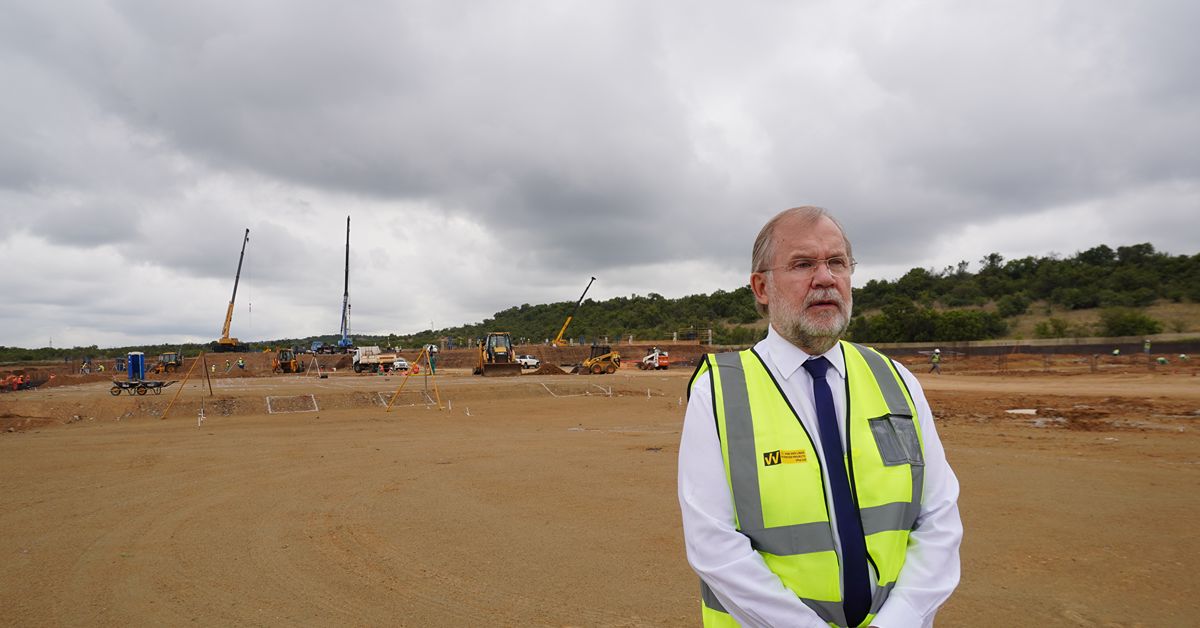
By Flip Buys, chairperson of the Solidarity Movement.
Why affirmative action still divides South Africans — and why many whites oppose it

Why does affirmative action remain such a significant problem for many whites?

What reasonable person could be opposed to redress for past injustices or efforts to promote equality? Can there truly still be people who resist the advancement of blacks, or who oppose the creation of greater opportunities for blacks in occupational groups where they are poorly represented?

Are there still people who do not recognise that black empowerment and development are essential for the country? What inspired Solidarity to display banners during last year’s G20 Summit with the statement that South Africa is the most race-regulated country in the world?

These and other questions trouble those who feel some whites complain unfairly, are selfishly focused on their own problems and show little willingness to address the country’s real crises.

Poverty or inequality?

For example, consider the levels of unemployment and poverty in the country, which — although increasing rapidly among whites — remain overwhelmingly a “black” crisis.

The question, then, is why it still appears that many whites who are merely “selfishly” guarding their own privileges are, in fact, camouflaged racists who show little concern for the fate of their fellow citizens, and seek only to entrench their prosperity behind high walls, security fences and privatisation.

If this is the future, then there is none; there is no hope for white or black, poor or rich, in South Africa.

The question is whether the government’s emphasis after 1994 should not have been on the solution of poverty rather than on the redistribution of existing jobs and wealth. After all, economic growth is the fastest equaliser and the most effective, proven solution to poverty. As American economist Thomas Sowell puts it: “What do the poor most need? They need to stop being poor. And how can that be done on a mass scale, except by an economy that creates vastly more wealth? Yet the political left has long had a remarkable lack of interest in how wealth is created. As far as they are concerned, wealth exists somehow, and the only interesting question is how to redistribute it.”

Affirmative action

But let us return to the question posed at the beginning. Why are Solidarity and so many whites negative about affirmative action? The short answer is that the outcomes after three decades have shown that the South African model of affirmative action does not work — it is counterproductive and harmful to the country and all its people.

No-one is opposed to righting what is wrong, nor is there resistance to equality or to measures aimed at achieving greater equality. The problem therefore does not lie with genuine redress, equal opportunities or the increased representation of blacks in certain job levels.

Affirmative action has been widely used around the world to protect minorities and help ensure their rightful share of the economic pie. It is normally a temporary mechanism in a free economy to achieve true equality by eliminating direct and indirect factors that hinder equality. Society can then move forward freely and equally, without state interference and characterised by true diversity.

What began more than three decades ago as an affirmative measure has resulted in a comprehensive racial distribution that is incompatible with a constitutional democracy, a functioning state and a growing economy capable of providing for all its people.

The challenge for South Africa was to apply a model developed to protect minorities, to advance majorities. Over time though, a growing gap emerged between beautiful constitutional theory and the harsh realities.

What the constitution allows has in practice hardened into a permanent state ideology that has become a higher authority than the constitution itself. Moreover, these measures no longer meet international legal requirements for timeliness, proportionality and appropriateness.

As a result, they provide ammunition for business leaders like Elon Musk to discredit South Africa on the international stage by saying there are more racial laws now than during apartheid.

The positions of the opponents of laws based on race are the following:

  • They consider such laws to be unconstitutional, since article 1 of the constitution states that South Africa is a nonracial state.
  • They argue that the laws do not comply with international law, which requires remedial measures to be temporary, proportionate and nuanced. International standards place greater emphasis on education and people’s socioeconomic status than on race. That is why the International Labour Organisation (ILO) considered Solidarity’s formal complaint and facilitated a mediation process between Solidarity and the government, which culminated in an agreement in 2024. This agreement was ratified by a court order and published in the Government Gazette, only to be breached again by the government with new racial regulations less than a year later.
  • This is unworkable, as the numerical ratios in the country make it impossible for laws targeting about 7% of the population to benefit the remaining 93%. There is a clear distinction between a system that protects minorities in a growing economy and one that seeks to uplift majorities in a shrinking labour market.
  • This constitutes an injustice against young whites under the age of 18, who comprise only 4.6% of the population. They are blamed for events that occurred before they were born, while the ANC does not take responsibility for its current actions. It also creates false expectations among the nearly 96% of young blacks that the measures directed at the 4.6% young whites will benefit them.
  • It is unfair, as the new dispensation was supposed to rest on a higher moral foundation than the crude racial measures of apartheid.
  • It harms whites without significantly benefiting blacks. If all whites were immediately removed from the labour force, black unemployment would drop by only 2.6 percentage points. The primary problem for whites is not unemployment, but underemployment (being employed in positions below their qualifications) due to the racial laws.
  • This is economically harmful for the country, as the World Bank and numerous other institutions have pointed out. It plays a significant role in the country’s long-standing economic stagnation. BEE compliance costs the country 2%-4% of GDP annually, equivalent to R145bn-R290bn.
  • It contributes significantly to the weakening and decay of numerous state institutions, as the emphasis in appointments falls more on race than on merit, while South Africa urgently needs a culture of excellence. In this way, it harms the poor through poor service delivery, which has become the “new normal” in many towns.
  • As a result, the most qualified people often do not get the job, since employment is driven by output-based targets rather than input-based principles.
  • The pursuit of equal outcomes leads to restrictions on the freedom of people and companies.
  • It has unintended consequences, such as enabling the system of tenderpreneurship and fostering a sense of entitlement.
  • It operates in the name of promoting diversity and uniformity, since all job levels are required to reflect the demographics.
  • It drives many job creators, high-level skills and high-net taxpayers out of the country. It has also torn so many families apart, with relatives living on different continents and children growing up without their parents or grandparents.
  • This is unnecessary, as given the population composition of South Africa a merit-based system would still result in the vast majority of appointments being blacks.
  • It leads to demographic dominance of minorities due to the imposition of the population composition on all institutions. In a country with South Africa’s varied geographical and demographic realities, not every institution can be fully representative. Therefore, the aspiration should be that institutions collectively reflect the population as a whole. Policies such as cadre deployment and “African hegemony” are aimed more at achieving dominance than at genuine correction.
  • It encourages a “demographic democracy”, as the ANC seeks to secure voters’ loyalty by emphasising race and racial favouritism.
  • That affirmative action in the workplace and BEE regulations apply to businesses means minorities’ lives and life chances in all areas are regulated by race.
  • The legislation obstructs the exercise of other constitutional rights, such as article 22, which guarantees freedom of choice of occupation and profession.
  • The South African model of affirmative action is an example of the unintended consequences that arise when a system takes on a life of its own, hardens into a state ideology, and extends far beyond the understandable correction of past injustices.
  • The most effective measure to promote redress and inclusive development remains economic growth, supported by input-driven programmes such as training, rather than output-driven targets that have in practice solidified into a comprehensive quota system. Such an input-driven approach provides the fastest and most natural way to achieve racial representation, without the unaffordable unintended consequences of the current system.

South Africa has the highest unemployment rate in the world, according to various sources. It is therefore urgently necessary to stimulate economic growth, create more jobs and reduce inequalities. Yet the outcomes after three decades indicate that the current model is no longer effective and that it is necessary to return to the drawing board, rather than trying to defend an unworkable and unjustifiable system.

The current redress model has not remedied the consequences of decades of apartheid, but worsened it — except for the benefit of a largely politically connected elite. At the same time it has become such a comprehensive set of racial measures that many whites feel wronged and even oppressed, as their lives are regulated by race.

After all, affirmative action is intended as a shield to help people, not as a sword to harm or dominate others.


By Flip Buys, chairperson of the Solidarity Movement.
Inleiding
Hoofstuk 1
Hoofstuk 2
Hoofstuk 3
Hoofstuk 5
Hoofstuk 7
Hoofstuk 8
Hoofstuk 12
Hoofstuk 15
Hoofstuk 16
Hoofstuk 17
Hoofstuk 19
Hoofstuk 20
Hoofstuk 21
Hoofstuk 22
Hoofstuk 23
Hoofstuk 25
Hoofstuk 27
Hoofstuk 28
Hoofstuk 31
Hoofstuk 32
Hoofstuk 34
Slot

Geskiedenisfonds

ʼn Fonds wat help om die Afrikanergeskiedenis te bevorder.

FAK

Die Federasie van Afrikaanse Kultuurvereniginge (FAK) is reeds in 1929 gestig. Vandag is die FAK steeds dié organisasie wat jou toelaat om kreatief te wees in jou taal en kultuur. Die FAK is ’n toekomsgerigte kultuurorganisasie wat ’n tuiste vir die Afrikaanse taal en kultuur bied en die trotse Afrikanergeskiedenis positief bevorder.

Solidariteit Helpende Hand

Solidariteit Helpende Hand fokus op maatskaplike welstand en dié organisasie se groter visie is om oplossings vir die hantering van Afrikanerarmoede te vind.

Solidariteit Helpende Hand se roeping is om armoede deur middel van gemeenskapsontwikkeling op te los. Solidariteit Helpende Hand glo dat mense ʼn verantwoordelikheid teenoor mekaar en teenoor die gemeenskap het.

Solidariteit Helpende Hand is geskoei op die idees van die Afrikaner-Helpmekaarbeweging van 1949 met ʼn besondere fokus op “help”, “saam” en “ons.”

Forum Sekuriteit

Forum Sekuriteit is in die lewe geroep om toonaangewende, dinamiese en doeltreffende privaat sekuriteitsdienste in

Suid-Afrika te voorsien en op dié wyse veiligheid in gemeenskappe te verhoog.

AfriForumTV

AfriForumTV is ʼn digitale platform wat aanlyn en gratis is en visuele inhoud aan lede en nielede bied. Intekenaars kan verskeie kanale in die gemak van hul eie huis op hul televisiestel, rekenaar of selfoon verken deur van die AfriForumTV-app gebruik te maak. AfriForumTV is nóg ʼn kommunikasiestrategie om die publiek bewus te maak van AfriForum se nuus en gebeure, maar ook om vermaak deur films en fiksie- en realiteitsreekse te bied. Hierdie inhoud gaan verskaf word deur AfriForumTV self, instellings binne die Solidariteit Beweging en eksterne inhoudverskaffers.

AfriForum Uitgewers

AfriForum Uitgewers (voorheen bekend as Kraal Uitgewers) is die trotse uitgewershuis van die Solidariteit Beweging en is die tuiste van Afrikaanse niefiksie-, Afrikanergeskiedenis- én prima Afrikaanse produkte. Dié uitgewer het onlangs sy fokus verskuif en gaan voortaan slegs interne publikasies van die Solidariteit Beweging publiseer.

AfriForum Jeug

AfriForum Jeug is die amptelike jeugafdeling van AfriForum, die burgerregte-inisiatief wat deel van die Solidariteit Beweging vorm. AfriForum Jeug berus op Christelike beginsels en ons doel is om selfstandigheid onder jong Afrikaners te bevorder en die realiteite in Suid-Afrika te beïnvloed deur veldtogte aan te pak en aktief vir jongmense se burgerregte standpunt in te neem.

De Goede Hoop-koshuis

De Goede Hoop is ʼn moderne, privaat Afrikaanse studentekoshuis met hoë standaarde. Dit is in Pretoria geleë.

De Goede Hoop bied ʼn tuiste vir dinamiese studente met Christelike waardes en ʼn passie vir Afrikaans; ʼn tuiste waar jy as jongmens in gesonde studentetradisies kan deel en jou studentwees met selfvertroue in Afrikaans kan uitleef.

Studiefondssentrum

DIE HELPENDE HAND STUDIETRUST (HHST) is ʼn inisiatief van Solidariteit Helpende Hand en is ʼn geregistreerde openbare weldaadsorganisasie wat behoeftige Afrikaanse studente se studie moontlik maak deur middel van rentevrye studielenings.

Die HHST administreer tans meer as 200 onafhanklike studiefondse namens verskeie donateurs en het reeds meer as 6 300 behoeftige studente se studie moontlik gemaak met ʼn totaal van R238 miljoen se studiehulp wat verleen is.

S-leer

Solidariteit se sentrum vir voortgesette leer is ʼn opleidingsinstelling wat voortgesette professionele ontwikkeling vir professionele persone aanbied. S-leer het ten doel om werkendes met die bereiking van hul loopbaandoelwitte by te staan deur die aanbieding van seminare, kortkursusse, gespreksgeleenthede en e-leer waarin relevante temas aangebied en bespreek word.

Solidariteit Jeug

Solidariteit Jeug berei jongmense voor vir die arbeidsmark, staan op vir hul belange en skakel hulle in by die Netwerk van Werk. Solidariteit Jeug is ʼn instrument om jongmense te help met loopbaankeuses en is ʼn tuiskomplek vir jongmense.

Solidariteit Regsfonds

ʼn Fonds om die onregmatige toepassing van regstellende aksie teen te staan.

Solidariteit Boufonds

ʼn Fonds wat spesifiek ten doel het om Solidariteit se opleidingsinstellings te bou.

Solidariteit Finansiële Dienste (SFD)

SFD is ʼn gemagtigde finansiëledienstemaatskappy wat deel is van die Solidariteit Beweging. Die instelling se visie is om die toekomstige finansiële welstand, finansiële sekerheid en volhoubaarheid van Afrikaanse individue en ondernemings te bevorder. SFD doen dit deur middel van mededingende finansiële dienste en produkte, in Afrikaans en met uitnemende diens vir ʼn groter doel aan te bied.

Ons Sentrum

Die Gemeenskapstrukture-afdeling bestaan tans uit twee mediese ondersteuningsprojekte en drie gemeenskapsentrums, naamlik Ons Plek in die Strand, Derdepoort en Volksrust. Die drie gemeenskapsentrums is gestig om veilige kleuter- en/of naskoolversorging in die onderskeie gemeenskappe beskikbaar te stel. Tans akkommodeer die gemeenskapsentrums altesaam 158 kinders in die onderskeie naskoolsentrums, terwyl Ons Plek in die Strand 9 kleuters en Ons Plek in Volksrust 16 kleuters in die kleuterskool het.

Skoleondersteuningsentrum (SOS)

Die Solidariteit Skoleondersteuningsentrum (SOS) se visie is om die toekoms van Christelike, Afrikaanse onderwys te (help) verseker deur gehalte onderrig wat reeds bestaan in stand te (help) hou, én waar nodig nuut te (help) bou.

Die SOS se doel is om elke skool in ons land waar onderrig in Afrikaans aangebied word, by te staan om in die toekoms steeds onderrig van wêreldgehalte te bly bied en wat tred hou met die nuutste navorsing en internasionale beste praktyke.

Sol-Tech

Sol-Tech is ʼn geakkrediteerde, privaat beroepsopleidingskollege wat op Christelike waardes gefundeer is en Afrikaans as onderrigmedium gebruik.

Sol-Tech fokus op beroepsopleiding wat tot die verwerwing van nasionaal erkende, bruikbare kwalifikasies lei. Sol-Tech het dus ten doel om jongmense se toekomsdrome met betrekking tot loopbaanontwikkeling deur doelspesifieke opleiding te verwesenlik.

Akademia

Akademia is ’n Christelike hoëronderwysinstelling wat op ’n oop, onbevange en kritiese wyse ’n leidinggewende rol binne die hedendaagse universiteitswese speel.

Akademia streef daarna om ʼn akademiese tuiste te bied waar sowel die denke as die hart gevorm word met die oog op ʼn betekenisvolle en vrye toekoms.

AfriForum Publishers

AfriForum Uitgewers (previously known as Kraal Uitgewers) is the proud publishing house of the Solidarity Movement and is the home of Afrikaans non-fiction, products related to the Afrikaner’s history, as well as other prime Afrikaans products. The publisher recently shifted its focus and will only publish internal publications of the Solidarity Movement from now on.

Maroela Media

Maroela Media is ʼn Afrikaanse internetkuierplek waar jy alles kan lees oor dit wat in jou wêreld saak maak – of jy nou in Suid-Afrika bly of iewers anders woon en deel van die Afrikaanse Maroela-gemeenskap wil wees. Maroela Media se Christelike karakter vorm die kern van sy redaksionele beleid.

Kanton Beleggingsmaatskappy

Kanton is ʼn beleggingsmaatskappy vir eiendom wat deur die Solidariteit Beweging gestig is. Die eiendomme van die Solidariteit Beweging dien as basis van die portefeulje wat verder deur ontwikkeling uitgebrei sal word.

Kanton is ʼn vennootskap tussen kultuur en kapitaal en fokus daarop om volhoubare eiendomsoplossings aan instellings in die Afrikaanse gemeenskap teen ʼn goeie opbrengs te voorsien sodat hulle hul doelwitte kan bereik.

Wolkskool

Wolkskool is ʼn produk van die Skoleondersteuningsentrum (SOS), ʼn niewinsgewende organisasie met ʼn span onderwyskundiges wat ten doel het om gehalte- Afrikaanse onderrig te help verseker. Wolkskool bied ʼn platform waar leerders 24-uur toegang tot video-lesse, vraestelle, werkkaarte met memorandums en aanlyn assessering kan kry.

Ajani

Ajani is ‘n privaat geregistreerde maatskappy wat dienste aan ambagstudente ten opsigte van plasing by werkgewers bied.

Ajani is a registered private company that offers placement opportunities to artisan students in particular.

Begrond Instituut

Die Begrond Instituut is ʼn Christelike navorsingsinstituut wat die Afrikaanse taal en kultuur gemeenskap bystaan om Bybelse antwoorde op belangrike lewensvrae te kry.

Sakeliga

ʼn Onafhanklike sake-organisasie

Pretoria FM en Klankkoerant

ʼn Gemeenskapsgebaseerde radiostasie en nuusdiens

Saai

ʼn Familieboer-landbounetwerk wat hom daarvoor beywer om na die belange van familieboere om te sien deur hul regte te beskerm en te bevorder.

Ons Winkel

Ons Winkels is Solidariteit Helpende Hand se skenkingswinkels. Daar is bykans 120 winkels landwyd waar lede van die publiek skenkings van tweedehandse goedere – meubels, kombuisware, linne en klere – kan maak. Die winkels ontvang die skenkings en verkoop goeie kwaliteit items teen bekostigbare pryse aan die publiek.

AfriForum

AfriForum is ʼn burgerregte-organisasie wat Afrikaners, Afrikaanssprekende mense en ander minderheidsgroepe in Suid-Afrika mobiliseer en hul regte beskerm.

AfriForum is ʼn nieregeringsorganisasie wat as ʼn niewinsgewende onderneming geregistreer is met die doel om minderhede se regte te beskerm. Terwyl die organisasie volgens die internasionaal erkende beginsel van minderheidsbeskerming funksioneer, fokus AfriForum spesifiek op die regte van Afrikaners as ʼn gemeenskap wat aan die suidpunt van die vasteland woon. Lidmaatskap is nie eksklusief nie en enige persoon wat hom of haar met die inhoud van die organisasies se Burgerregte-manifes vereenselwig, kan by AfriForum aansluit.