This is what AfriForum achieves with R22.6 million a month

A response to hit-pieces on AfriForum published by News24.

News24 is recruiting support for AfriForum

On the one hand, News24 is strengthening AfriForum. Their vendetta against AfriForum and their unfair attacks are causing many more people to side with AfriForum against News24. This consequently expands AfriForum’s support base and reminds hundreds of thousands of members of the public why strong, independent civil society organisations such as AfriForum are needed. For that, we can thank News24.

On the other hand, they further undermine News24’s already damaged credibility. When journalists exchange their role as objective reporters for activism, it is not AfriForum that ultimately suffers the greatest damage, but the trust that the public should have in the media.

Apologies to AfriForum

The eagerness of a group of anti-AfriForum activists at News24 and some other media institutions to attack AfriForum repeatedly leads to them making mistakes.

As a result, News24 and other media institutions have had to apologise numerous times for publishing falsehoods about AfriForum. It is a devastating blow for any media institution’s credibility when journalists are caught red-handed deliberately publishing falsehoods in support of an ideological agenda.

The Contrast Between AfriForum and News24 on Transparency

The media and civil society organisations play an important watchdog role in holding the government accountable and promoting transparency.

It is therefore important that both News24 and AfriForum themselves set the example by acting transparently.

However, the facts show a stark contrast. While AfriForum plays open cards about its income, expenses, and achievements, News24 refuses to answer important questions about its own finances.

When the Department of Social Development notified AfriForum that News24 had requested access to AfriForum’s financial statements, AfriForum decided not to oppose the request. On the contrary, AfriForum viewed it as an opportunity to show the public how the organisation spends its money and to put hundreds of successes that have already been achieved under the magnifying glass.

AfriForum is proud that the organisation has received an unqualified audit annually throughout its 20-year existence.

News24’s actions stand in sharp contrast to this. News24 refused to answer any of the questions posed by AfriForum about its financial statements and remuneration structures. Among other things, the publication refused to explain how its parent company’s donation of R8 million to the African National Congress (ANC) was justified, despite the ANC’s extensive record of corruption and mismanagement.

News24 also refused to explain why, since 2021, the company of which it forms part no longer published its financial statements. Unlike AfriForum, News24 was not willing to disclose its financial statements.

The question is simple: why the secrecy?

Old news

What makes this whole episode even more remarkable is that the questions News24 is now trying to raise are not new questions at all.

The same allegations and insinuations have already been raised by Juluis Malema in the past. AfriForum has already responded to them in detail. News24’s investigating activists apparently missed it and therefore I am giving the facts again:

This is how AfriForum spends R22.6 million monthly

News24 and Malema’s allegations gives me the ideal opportunity to indicate on behalf of AfriForum how grateful and proud we are of the successes and results that AfriForum achieves with the income generated from membership fees. These successes are by the grace of God, the prudent use of resources, hard work by both AfriForum staff and 10 000 volunteers, as well as support of approximately 300 000 members. We want the world to know this. Here are some of the facts:

  • Unqualified (“clean”) audits

    AfriForum has received unqualified audit opinions every year since its establishment 20 years ago. In contrast, just over 10% of municipalities in the country receive unqualified audit opinions.

    As a non-profit organisation with no shareholders, AfriForum uses every cent the organisation receives to achieve its clearly defined objectives. AfriForum must submit annual reports and financial statements to the South African Revenue Service and the Department of Social Development so that they can ensure that AfriForum complies with the legal requirements for a public welfare organisation. These reports have been accepted without question for the past two decades.

  • AfriForum must build faster and more to counter accelerating state deterioration

    Public services and municipalities are deteriorating at an increasing rate, while crime remains out of control. Within this context, AfriForum and the Solidarity Movement’s calling is to build a better present and future for our communities and our descendants by creating do-it-yourself solutions.

    This places increasing pressure on organisations like AfriForum to do more, respond faster, and take on greater responsibilities. To manage this pressure that accelerated operations place on AfriForum’s resources, AfriForum focuses its spending on two main objectives, namely as a community-builder, but also as a watchdog.

  • AfriForum as community-builder and watchdog

    The first core objective is to build strong, self-reliant communities that can serve as a buffer against state deterioration. The second is our watchdog role against corruption, abuse of power, maladministration, the decline of the criminal justice system, and attacks on language and cultural rights.

    That is why I am proud that over the past six years AfriForum has been able to spend R1.6 billion on self-do projects as countermeasures against ANC maladministration. Approximately 70% of this (or R1.15 billion) has been used for local communities, security initiatives, and self-do actions. The remaining 30% has been spent on our watchdog function, legal proceedings, and campaigns.

    AfriForum’s current income, however significant it may be, is unfortunately still not sufficient to counteract the extent of state deterioration. The organisation must increasingly deliver state services, but without receiving tax money for it. The urgency for intervention is constantly increasing as more municipalities, state institutions, and public services collapse. That is why AfriForum is constantly working to expand its capacity so that even more communities can be supported.

  • Where does AfriForum’s income come from?

    AfriForum is grateful for the overwhelming support that the organisation receives. The monthly donations from AfriForum’s approximately 300 000-member base contribute to 95% of AfriForum’s average total income of approximately R22.6 million per month. This shows that smaller contributions by thousands of ordinary people make it possible to build a better present and future on a larger scale.

    Feedback we receive from many AfriForum members is that they feel that they get more value from their voluntary contribution to AfriForum than what they do from the taxes they are compelled to pay to a corrupt and incompetent state.

  • What is AfriForum’s income spent on?

    AfriForum is active in a myriad of areas. Some of the most prominent include:

    1. Safety

     AfriForum supports 177 neighbourhood and farm watches across the country.

     These include:

    • two control rooms that operate 24 hours a day – one in Centurion and one in Bloemfontein;
    • emergency response coordination;
    • free panic buttons for AfriForum members;
    • a nationwide camera network for monitoring and response;
    • 33 training modules;
    • more than 10 000 trained volunteers;
    • 34 drones;
    • drone training for approximately 100 pilots who regularly support the South African Police Service during operations;
    • nationwide neighbourhood watch patrols;
    • the purchase of 1 497 bulletproof vests;
    • response vehicles;
    • 8 904 two-way radios;
    • the maintenance and expansion of a communication network with 71 repeaters;
    • numerous other safety tools;
    • safety audits at schools; and
    • personnel who travel nationwide to coordinate neighbourhood watch networks.

    This work produces results every day. However, the success stories are too numerous to list in full here. Please visit AfriForum’s website for more information.

     2. Community development

    AfriForum has 165 branches that are active in more than 100 towns. Where municipalities fail, communities step in.

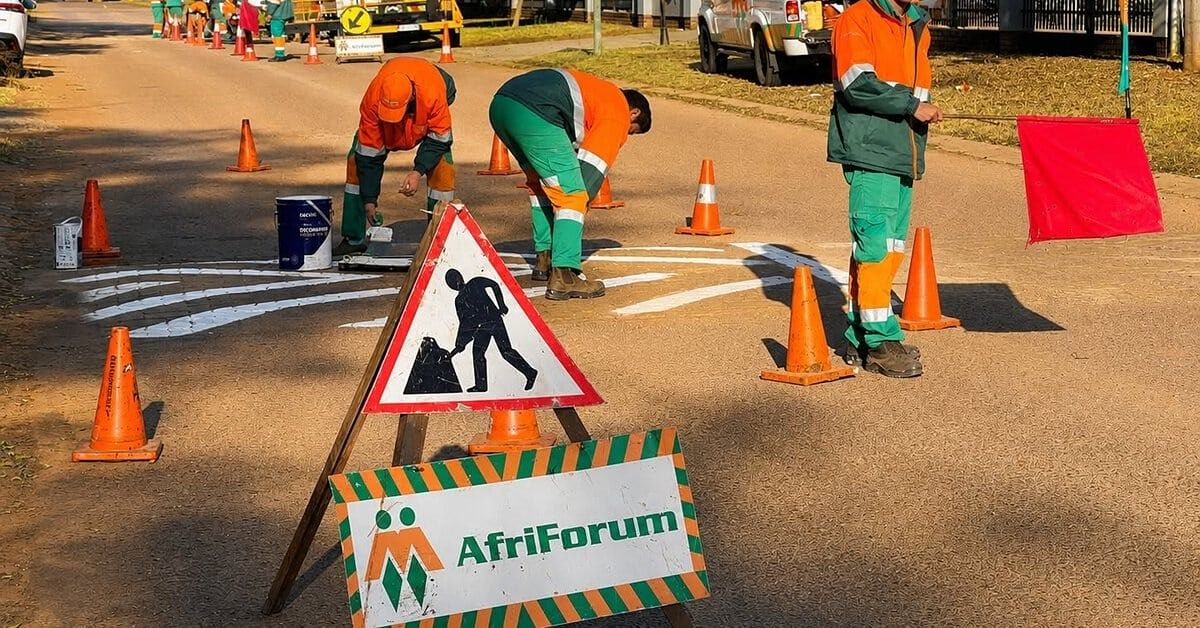
    AfriForum has already appointed 45 permanent staff members in local community teams to support maintenance, repairs, and service delivery where municipalities fail to do their work. This initiative is further expanded as service delivery deteriorates.

    Our community teams support branches that carry out day-to-day work that local authorities are supposed to do. This includes, among other things:

    • Garbage disposal projects;
    • recycling initiatives;
    • the repair of potholes and roads;
    • painting road markings and school crossings;
    • lawn mowing; and
    • emergency water points.

    To be able to carry out this work, AfriForum has 23 vehicles and tractors, 49 trailers and 151 bush cutters.

    Since the beginning of 2026 alone:

    • 450 self-do projects have been completed;
    • 116 tonnes of tar have been used;
    • more than 81 tonnes of recyclable material have been processed;
    • more than 1 000 litres of road paint have been used;
    • about 5 000 hectares of grass have been cut; and
    • 135 emergency water points have been installed and are maintained in towns and cities where water crises occur frequently.

    In addition, AfriForum’s garbage disposal projects have already removed hundreds of tonnes of waste from communities.

     3. Court cases and private prosecution

    Court cases cost millions of rands. They are expensive – but necessary. AfriForum is currently involved in approximately 80 active court cases, while AfriForum’s private prosecution unit under the leadership of Advocate Gerrie Nel has already taken on more than 320 cases.

    The victories are extensive. Recent examples include:

    • The disclosure of Eskom contracts;
    • action against the National Energy Regulator of South Africa’s secrecy about Eskom tariff increases;
    • numerous successful municipal cases;
    • the dissolution of the Ngwathe Municipal Council;
    • challenges against unfair tariffs in the Cape Town and Tshwane metros;
    • legal action to protect Afrikaans schools;
    • support for the family of Senzo Meyiwa; and
    • successful prosecutions of rapists and violent criminals.

    4. Cultural and Traditional Communities

    AfriForum’s work extends far beyond urban areas. The organisation works with numerous traditional and cultural communities, including the Barolong Boo Seleka, the AmaBhele kaJamangile, and Orania. Approximately 2.5% of AfriForum’s income is spent on this, while 67.5% of AfriForum’s income is spent in other cities and towns across the country.

    5. Cultural Projects

    AfriForum is not only creating safety and infrastructure; we are also building the future of our cultural community. That is why we support projects in schools such as the “Dink of Sink” unprepared debate competition for learners and students, “Besigheidsbytjies” for young entrepreneurs, as well as our anti-bullying campaign that focuses on schools.

    AfriForumTV also plays an important role in the promotion of Afrikaans by making free content, children’s programmes, documentaries, and entertainment available to a growing audience at www.afriforumtv.co.za.

Institutions of the Solidarity Movement also build together at full speed

AfriForum does not stand alone and is proudly part of the Solidarity Movement, which includes many other institutions that are helping to build a future in various areas. Some examples of the building work that is being done include:

  • An Afrikaans university that is currently building an even larger campus;
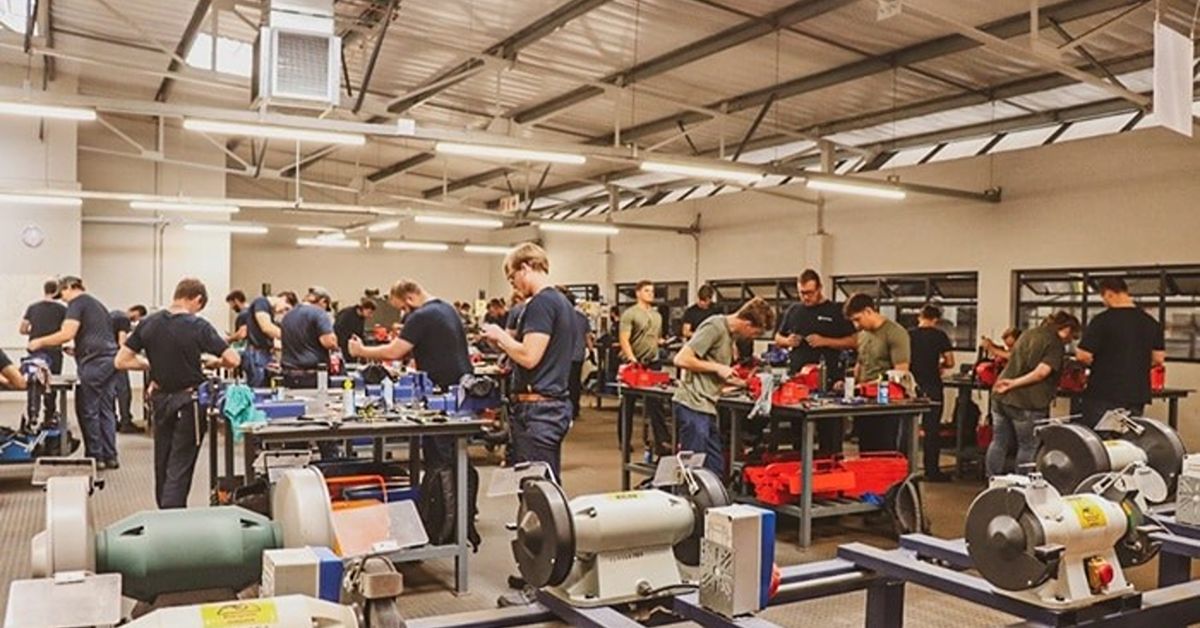
  • an Afrikaans vocational training institution;
  • the Wolkskool and Gimnasium Pretoria private school;
  • the management of Afrikaner heritage sites such as the Voortrekker Monument;
  • work and employment networks;
  • a nationwide network of social workers;
  • a study assistance fund that has already paid out more than R500 million in study aid; and
  • an Afrikaans media institution.

AfriForum’s mandate and reporting to members

AfriForum works continuously with a mandate from its members. A vote in an election gives a political party a mandate for five years. In contrast, AfriForum’s mandate is renewed monthly by members who make a voluntary contribution each month.

AfriForum also continuously reports to its members on its activities through, among other things, the organisation’s members’ magazine, on its website, in media statements, and on social media.

Two more myths: director remuneration and salaries

The doubt-sowers from the ranks of the anti-AfriForum activists are also trying to cast doubt on AfriForum’s remuneration structures.

The reality is that AfriForum directors who are employed by institutions of the Solidarity Movement do not receive any director remuneration. The only director fees that are paid are to independent, non-executive board members, at approximately R4 000 for each of the four meetings held per year.

AfriForum’s job level grading is determined according to the Paterson grading system by independent experts from outside AfriForum. Remuneration is set at approximately the 25th percentile of market-related scales. This means that AfriForum’s remuneration scales are lower than those paid in many private sector companies. AfriForum’s personnel costs have been equivalent to an average of approximately 36% of AfriForum’s income in recent years. This is significantly lower than the general norm of between 50% and 80%, which is often the case in non-profit service-providing organisations.

A message to anti-AfriForum activists

AfriForum will continue to build. We do not need the permission of the suspects to do so. We will not be deterred by lies or propaganda; on the contrary, every attack motivates us to work harder, build faster and become stronger.

AfriForum continues full steam ahead to help build a better present and future for our families, our communities, our descendants and all who want to see a safer, better functioning society in South Africa.

And that is exactly what AfriForum does with its members’ hard-earned money.


By Kallie Kriel, CEO of AfriForum.
Liberals must become conservative to save liberty

My primary school rugby coach used to tell us, “Play the ball, not the man.” Mr Barkhuizen’s advice has stayed with me ever since, and I still try to live by it. A person is measured by the battles they choose to fight, and I’ve never had much time for pettiness or personal attacks. If you throw mud, you end up dirty yourself. It was John F. Kennedy who said that “the problem with radicals is not their views, but their intolerance.” Democratic maturity requires the willingness to tolerate those who disagree with you.

NP van Wyk Louw made a similar plea for what he called an “open conversation”: “The flow of ideas is to a nation what blood circulation is to the body. The flow of ideas involves freely expressing your opinion and listening attentively to other people’s views; it’s reciprocal…”

I must admit, however, that I recently forgot my old rugby coach’s lesson when Max du Preez claimed, among other things, that the leaders of the Solidarity Movement are not merely democratic opponents of the ANC, but are actively undermining the state. That’s an accusation of treason! That was only one of many insults. According to him, we are, naturally, racists who clung to apartheid in our youth and still long for its return. For historical reasons, playing the race card against Afrikaners remains an easy and popular tactic. It may be effective politics, but it is still dirty play.

Let me restate the obvious. We do not long for the South Africa of the National Party, but neither do we look forward to the future offered by the ANC. We do not want the “old” South Africa back, but neither are we content with the decaying “new” South Africa. That is why we are not working towards either the old or the new South Africa, but towards a different South Africa. We oppose the ANC, yet we love this country and all its people.

As a young student, I never believed the ANC would successfully govern a modern state. The Chinese philosopher Jia Yi explained the reason as early as the second century BC: the qualities required to wage a successful liberation struggle are fundamentally different from those required to govern a country successfully.

My concerns about South Africa’s new political dispensation were never rooted in opposition to democracy or freedom. On the contrary, they arose precisely because federalism is a prerequisite for sustainable democracy and lasting liberty. I saw the ANC as an equality movement disguised as a freedom movement, convinced that in its pursuit of equal outcomes it would ultimately place freedom itself at risk.
Democracy in Africa

Historian Martin Meredith captured my concerns well in Africa: 50 Years of Independence: “Africa’s political record since independence has been sobering. Over the course of three decades, not a single head of state allowed himself to be voted out of office. Of roughly 150 African leaders, only six relinquished power voluntarily, some only after decades in office. Among approximately 50 African states, almost all became one-party states or military dictatorships, while opposition parties were outlawed in 32 of them. Where elections were held, they largely served to legitimise the incumbent and reinforce the ruling party’s grip on power. Between 1960 and 1989, some 150 elections took place across twenty-nine African countries, yet opposition parties failed to win a single parliamentary seat. Only three countries – Senegal, Botswana, and the tiny Gambia – maintained multi-party systems and held regular free and fair elections”.

Socialism

The many conversations I had with COSATU leaders before 1994, several of whom would later occupy senior positions in government, convinced me that they remained committed to socialism. The words of Judge Jan Steyn have stayed with me ever since: “It is naive to believe that one can adopt the basic economic tenets of socialism, without also inheriting its authoritarian political structures and limitations of personal freedom. There is ample evidence to substantiate the argument that there is a real and unbreakable connection between economic and political freedom, both of which may be lost if the state unduly expands its role in society.”

Federalism

I was equally convinced that federalism was essential if a country as geographically vast and demographically diverse as South Africa was to be governed successfully. The liberal thinker Olive Schreiner expressed this brilliantly: “The special danger of centralized democratic States is always the tendency to fall a prey to the tyranny of sections, of large interests, or of strong individuals. The walls of each self-governing State [in a federation] are so many barricades, each one of which must be broken down before any oppressive over-domination can absolutely succeed; and, behind any one of which a successful resistance may take place when others have fallen. In short, federalism makes for freedom.”

Anger

I have no objection to people criticising us. That is part of democracy and part of the “open conversation” I referred to earlier. What troubles me, however, is the bitterness displayed by commentators such as Max du Preez. He is not simply trying to persuade his readers that we are wrong; he wants them to believe that we are evil. My own explanation of this: if we had merely been wrong, he would not be angry with us. He is angry because, in his view, we should never have been right about what an ANC government would ultimately mean for South Africa. His dreams have become nightmares, and now he blames those who warned that the storm was coming. It is rather like someone whose house has been washed away becoming furious with the weather forecaster, instead of acknowledging that he ignored every warning and took no precautions.

Conservatism

I understand Max’s opposition to apartheid. I grew up in a home where it was regarded as both morally wrong and fundamentally unworkable, and where people believed that a better alternative had to be found.

What I do find puzzling is that he continues to cling to ideas from a different era. Rather than confronting the root causes of South Africa’s deepening crisis, he remains preoccupied with its symptoms – corruption, maladministration, and state failure.

The fundamental mistake made by Du Preez and many of his contemporaries was that they never changed gears after 1994. They may dislike hearing this, but liberals who spent the 1980s dismantling an illiberal system should have become conservatives once constitutional democracy had been established. Instead, many remained intellectually trapped in the struggles of the past.

Few have expressed this necessity more eloquently than Samuel Huntington: “Historically, American liberals have been idealists, pressing forward toward the goals of greater freedom, social equality, and more meaningful democracy. The articulate exposition of a liberal ideology was necessary to convert others to liberal ideas and to reform existing institutions continuously along liberal lines.

“Today, however, the greatest need is not so much the creation of more liberal institutions as the successful defence of those which already exist. This defence requires American liberals to lay aside their liberal ideology and to accept the values of conservatism for the duration of the threat. Only by surrendering their liberal ideas for the present can liberals successfully defend their liberal institutions for the future.”

“Liberals should not fear this change. Is a liberal any less liberal because he adjusts his thinking so as to defend most effectively the most liberal institutions in the world? To continue to expound the philosophy of liberalism simply gives the enemy a weapon with which to attack the society of liberalism. The defence of American institutions requires a conscious, articulate conservatism which can spring only from liberals deeply concerned with the preservation of those institutions.”

“The American political genius is manifest not in our ideas but in our institutions. The stimulus to conservatism comes not from the outworn creeds of third-rate thinkers but from the successful performance of first-rate institutions.”

“Conservatism does not ask ultimate questions and hence does not give final answers. But it does remind men of the institutional prerequisites of social order. And when these prerequisites are threatened, conservatism is not only appropriate but also essential. In preserving the achievements of American liberalism, American liberals have no recourse but to turn to conservatism. For them especially, conservative ideology has a place in America today.”

The “Afrikaner Threat”

The so-called “Afrikaner threat” exists largely in the imagination of a small group of commentators. Strong, well-organised cultural communities are, alongside a free press, an independent judiciary, and a robust political opposition, essential counterweights to revolutionary movements that have lost their way.

The real tipping point for those commentators, who seem determined to tear down everything we are trying to build, came when we used our access to the US administration to urge it not to punish South Africa simply because it disagreed with the ANC government. To many on the political left, Donald Trump embodies everything they oppose in a single individual: he is white, Western, male, conservative, capitalist, Christian, powerful, and willing to exercise that power. They cannot attack him directly, so they cast us as his proxies and direct their hostility towards us instead.

Normality

Our vision is to build a strong cultural ecosystem that enables Afrikaners to continue living freely, securely, and prosperously in Africa. We believe this is the only way in which we can make a lasting contribution to the well-being of both South Africa and all its people. Our ambition is remarkably modest. We simply want to restore a sense of normality and, in doing so, help make this country a better place for everyone.

By Flip Buys, chairperson of the Solidarity Movement.

The Solidarity Movement wants to play a positive role in South Africa

South Africa is approaching the fiftieth anniversary of the 1976 Soweto uprising. The rallying cry of black youth in 1976 was: “We do not want to be taught in Afrikaans.” Fifty years later, a new cry has emerged: “You may not be taught in Afrikaans.” The 1976 slogan was a cry for freedom. The slogan of 2026 is its opposite: an attempt to deny Afrikaans speakers the freedom to receive education in their mother tongue.

For Afrikaners, this is nothing new. More than two centuries ago, on 19 July 1822, Lord Charles Somerset, Governor of the Cape, issued a directive declaring English the sole language of instruction in the Colony’s schools. The purpose was clear: to consolidate British dominance.

Concentration camps

A century later, during the Anglo-Boer War, the British established English-medium schools inside concentration camps as part of an effort to anglicise Afrikaner children. The British Director of Education, E.B. Sargant, made the objective explicit: “English must be the only language throughout South Africa.” Following the British victory, the new Governor, Lord Alfred Milner, triumphantly declared: “I have saved the British position in South Africa and have knocked the bottom out of the great Afrikaner nation for ever and ever, Amen.”

Almost a century later, the constitutional settlement of 1994 guaranteed mother-tongue education, including at university level. Afrikaans speakers believed that the lessons of 1822, 1902 and 1976 had finally been learned. They believed that everyone’s freedom to use and develop their language and culture through institutions such as schools and universities was secure. Afrikaans, at last, had been decolonised.

English

Yet the position of non-English languages has deteriorated sharply since 1994. All historically Afrikaans universities and hundreds of Afrikaans schools have, over time, been compelled to anglicise.

The BELA amendments of 2024 grant state officials the final authority over schools’ language and admission policies. This caused significant concern among Afrikaans-speaking communities because ANC politicians, acting as modern-day Lord Somersets, made it clear that they intended to use the legislation to force Afrikaans schools to change their language policies.

Broken agreements

The tensions created by these legislative amendments and political statements led to negotiations between the government and Afrikaans interest groups, resulting in two separate settlements. Those settlements were effectively abandoned almost immediately after the President proceeded with the implementation of the BELA Amendment Act. Shortly thereafter, the ANC government also reneged on an agreement concerning affirmative action that had been reached with Solidarity and facilitated by the International Labour Organisation (ILO), by introducing new racial quotas. During the same period, the President signed legislation enabling expropriation without compensation. To add insult to injury, South Africa’s highest courts ruled that the slogan “Kill the Boer” does not constitute hate speech and is therefore permissible.

These repeated breaches of formal agreements have created a profound breakdown of trust. The Solidarity Movement, which includes AfriForum, views this as a breach of the 1994 settlement itself.

The Afrikaner Declaration

In an effort to repair this growing trust deficit, Afrikaner organisations representing approximately two million people issued an Afrikaner Declaration, extending a hand of cooperation to our fellow South Africans. The declaration made three things clear: that Afrikaners see South Africa as their future; that we wish to work alongside others; and that we seek to create the conditions necessary to protect our language and culture so that Afrikaners are not alienated from their homeland, but are able to build, remain, and contribute to making South Africa a better country for all. The government did not respond.

The ANC versus South Africa

Following President Trump’s election in the United States, Solidarity used its access in Washington to argue that ordinary South Africans should not suffer the consequences of tensions between governments. We love this country, even if we do not support the ANC. We have stated unequivocally that we do not regard the situation in South Africa as a genocide, nor do we view ourselves as refugees. We do, however, believe that the ANC has breached the 1994 settlement, and that the United States has a role to play in supporting reconciliation in South Africa, just as it did before 1994.

Rights, not grievances

Du Preez’s claim that Afrikaners, or the work of the Solidarity Movement, are driven by grievance politics is simply unfounded. We are defending our language and culture and asserting our constitutional rights and freedoms. This is not nationalism; it is cultural self-preservation. The more than 600 000 members of our Movement support our work because we offer practical solutions to challenges, including mother-tongue education, training, safety, and many other pressing concerns.

The Solidarity Movement is a proud South African, Afrikaner and African organisation. We are building the cultural ecosystem necessary to ensure that Afrikaners can continue to live, build and thrive in South Africa with confidence. In doing so, we seek to make a lasting contribution to the wellbeing of this country and all its people.

By Flip Buys, chairperson of the Solidarity Movement.

The Solidarity Movement plays a constructive role – a response to Max du Preez

Max du Preez peppers his scathing attack on Solidarity and AfriForum with liberal quantities of loaded terms such as “hardcore nationalist,” “right-wing,” “fundamentalist ideologue,” and more.

Apartheid and accusations of racism are the final trump cards that are played against an Afrikaner organisation once all the other cards have been exhausted.

We will not be intimidated by false accusations that try to silence us when we attempt to protect the human rights and interests of South-Africans, including Afrikaners.

The motivation behind the Solidarity Movement’s “we will do it ourselves, and we will do it together” strategy, is an honest attempt to work with our fellow citizens in a spirit of mutual recognition and respect, to make South Africa a better place for all. The core of our culture remains ’a Boer makes a plan’.

We certainly do not long for the past under apartheid, but neither do we look forward to the future under the ANC.

Ever since I was a student, I have therefore sought a third way as an alternative to apartheid on the one hand, and a country dominated by a revolutionary movement with totalitarian tendencies on the other. As a Christian democrat, I advocated, following the example of Conrad Adenauer, a federal model as a third way for South Africa, as it safeguards freedom for all much better.

Misinformation

Like the ANC’s Secretary-General, Du Preez blames our “misinformation” for the deterioration in relations between South Africa and the United States, even though he knows that several media houses have had to apologise to us for falsely claiming that we made allegations of a “genocide”.

In the process, Du Preez ignores the fact that the ANC government is responsible for the diplomatic dispute due to its foreign policy and certain race-based policies that hamper economic growth and job creation while contributing to racial polarisation. Secondly, he disregards Solidarity and AfriForum’s efforts to persuade American decision-makers, using factual information, not to punish the country with tariffs, sanctions, and exclusion from AGOA simply because they disagree with the ANC.

These efforts, undertaken in the national interest, have repeatedly been undermined by ANC leaders through their continued and unnecessary actions against US interests.

Our engagement with the Trump administration is not based on taking their political side against the South African government. It is, however, in South Africa’s national interest to maintain good relations with the US government, as well as other countries. The ANC government’s long-standing neglect of these relationships compelled us, out of patriotism for the country, to intervene despite our differences with the ANC.

It is also our democratic right to inform the international community when the ANC breaches the 1994 settlement, for example, through attacks on Afrikaans schools and race-based legislation.

Fire brigade

AfriForum runs around 100 projects nationwide every day to make the country a better place by improving municipal services, repairing roads, combating crime through neighborhood watches, and upholding the rule of law. These projects may serve Afrikaner interests, but they also serve the broader public interest. We cannot provide all state services without state revenue. The ANC is elected, paid, and funded through our taxes to deliver public services. We are criticized for creating a so called parallel state, yet no alternative is offered for what we are supposed to do when the ANC allows one public service after another to collapse.

Voters who, despite the rotten and corrupt government under which they suffer, repeatedly vote for the same party become accomplices rather than victims. We therefore welcome polls indicating that increasing numbers of historic ANC voters wish to free themselves from their former party.

Nor is it clear what Max’s proposal is when Afrikaners are excluded, based on race, from services for which they pay taxes. He complains more loudly about the siren of AfriForum and Solidarity’s fire engine than about the radical arsonists who are governing the country into ruin while looting it.

Let me put it bluntly: the ‘Maxists’ helped propagate the Marxists into power, and now they stand astonished at the foreseeable consequences, and are angry with us for attempting to halt the decline and implement practical rebuilding plans. The anti-apartheid industry, which previously protested loudly against the former oppressive racial dispensation, is now deathly silent about the failed racial system that replaced it in the name of redress. Basic mathematics shows that laws against 5% young whites cannot improve the chances of 95% young black people.

Normality

Our Movement does not have an evil plan to revive the past, but rather a plan to create a normal future. We simply want what the people of the Western Cape, from where Max safely writes, already have: functioning towns, an effective civil service, safety, a say in matters that affect us, good race relations, and the political, economic, and cultural freedom to live our lives as we see fit, without endless race laws and a government ruling against us.

We are not simply asking for fair rulers; we know that greater freedom is a prerequisite for normality. We do not experience it as a democracy when Mr Panyaza Lesufi, with only around 34% of the ANC vote in Gauteng, effectively holds 100% of the power over Afrikaans schools.

Demographic democracy

South Africa is not merely a country of isolated individuals that can easily be governed by a central government with a standardised policy. Credible opinion polls show that it is a country of many languages and cultures, rather than four races or a single South African identity.

This heterogeneous population has survived various governments and dispensations and is far too complex to be governed through a simplistic majoritarian system. For roughly three decades, South Africa has been a demographic democracy in which people vote more according to identity than policy. The overwhelming majority of voters do not ask: “What does my party believe?” but rather: “Who is my party?”

Voting behaviour is not similar to consumer behaviour, in which people shift their support to the best product or service. This is not unique to South Africa. It is therefore good news for freedom and democracy that the ANC has been forced into a GNU at national level, and that the upcoming local government elections are likely to produce more coalitions that may hopefully save many towns and cities from decline.

Realities

Naturally, I hope that the majority of voters will vote the ANC out of power in the near future. But hope is not a strategy, and we must work with realities rather than wishes.

As David Welsh warned: “The comparative evidence from divided societies does not offer much support for the view that the salience of ethnic or racial identities will eventually give way to voting alignments that are shaped more by, say, class, interests or ideology.”

This does not mean that I have lost hope in democracy. For democracy to be sustainable, however, a dispensation must meet the conditions required for democracy. One important condition is cultural freedom, because democracy without cultural freedom generally amounts to freedom only for the demographic majority. We do not want special favours, but we do not want to plead forever on our knees for cultural rights and -room that are in the constitution.

Weather bureau

If Max genuinely believes that we welcome racial polarisation and the failure of South Africa, then he believes many other strange things as well. A single look at the country’s population composition, economy, divisions, and political realities clearly shows that good race relations and a functioning country are in everyone’s interest. Fortunately, although political relations may be poor, good personal relationships between people remain strong.

Max is correct that I began my career at the far-right Mine Workers’ Union (MWU). That is precisely why my colleagues and I transformed the organisation into a mainstream Christian-democratic movement.

It is also true that we did not believe the ANC would govern the country as successfully as, for example, Botswana has been governed. A thorough study of ANC policy convinced us that the party still clings to an outdated ideology with which it cannot successfully govern a country with such a large modern sector.

We concluded that, due to history, Afrikaners could become a vulnerable minority group and that a self declared revolutionary government could drive the most educated out of the country, to the great detriment of the country and all its people.

Our starting point was that a strong self-help movement would become necessary to counter state decay, implement practical solutions at the grassroots level, and protect freedom, democracy, and the legitimate human rights of Afrikaners and other groups. I therefore believed it essential to transform the former MWU into a modern network of self-help organisations founded on mainstream Christian-democratic principles.

We take no pleasure in watching the country steadily decline, like it gives the weather bureau no pleasure to see a destructive storm weather, against which they had warned for so long, finally arrive.

Compete or cooperate

We do not believe that the best solution for good race relations is to compete head-on with the demographic majority for political support. We therefore strive instead for cooperation based on mutual recognition and respect. The advantage of this approach is that common viewpoints on all issues are not essential, only shared interests like to make the country a better place.

This is the essence of our engagement and cooperation with numerous black and coloured groups and leaders across the country.

The French classical thinker Alexis de Tocqueville said: “The majority will accept the minority only if the minority gives up that which it values most.” I therefore believe in Ralph Sockman’s advice: “The test of tolerance comes when you are in a majority. The test of courage comes when you are in a minority.”

We look forward to continuing to play a constructive role now that both countries have appointed ambassadors to each other’s capitals.

South Africa’s motto is unity in diversity. Our cultural identity as Afrikaners does not conflict with our national identity as South Africans. Our Movement uses the constitutional space for diversity to build a cultural ecosystem that enables long-term survival. This will enable Afrikaners to make a sustainable contribution to the well-being of the country and all its people.


By Flip Buys, chairperson of the Solidarity Movement.

Why affirmative action still divides South Africans — and why many whites oppose it

Why does affirmative action remain such a significant problem for many whites?

What reasonable person could be opposed to redress for past injustices or efforts to promote equality? Can there truly still be people who resist the advancement of blacks, or who oppose the creation of greater opportunities for blacks in occupational groups where they are poorly represented?

Are there still people who do not recognise that black empowerment and development are essential for the country? What inspired Solidarity to display banners during last year’s G20 Summit with the statement that South Africa is the most race-regulated country in the world?

These and other questions trouble those who feel some whites complain unfairly, are selfishly focused on their own problems and show little willingness to address the country’s real crises.

Poverty or inequality?

For example, consider the levels of unemployment and poverty in the country, which — although increasing rapidly among whites — remain overwhelmingly a “black” crisis.

The question, then, is why it still appears that many whites who are merely “selfishly” guarding their own privileges are, in fact, camouflaged racists who show little concern for the fate of their fellow citizens, and seek only to entrench their prosperity behind high walls, security fences and privatisation.

If this is the future, then there is none; there is no hope for white or black, poor or rich, in South Africa.

The question is whether the government’s emphasis after 1994 should not have been on the solution of poverty rather than on the redistribution of existing jobs and wealth. After all, economic growth is the fastest equaliser and the most effective, proven solution to poverty. As American economist Thomas Sowell puts it: “What do the poor most need? They need to stop being poor. And how can that be done on a mass scale, except by an economy that creates vastly more wealth? Yet the political left has long had a remarkable lack of interest in how wealth is created. As far as they are concerned, wealth exists somehow, and the only interesting question is how to redistribute it.”

Affirmative action

But let us return to the question posed at the beginning. Why are Solidarity and so many whites negative about affirmative action? The short answer is that the outcomes after three decades have shown that the South African model of affirmative action does not work — it is counterproductive and harmful to the country and all its people.

No-one is opposed to righting what is wrong, nor is there resistance to equality or to measures aimed at achieving greater equality. The problem therefore does not lie with genuine redress, equal opportunities or the increased representation of blacks in certain job levels.

Affirmative action has been widely used around the world to protect minorities and help ensure their rightful share of the economic pie. It is normally a temporary mechanism in a free economy to achieve true equality by eliminating direct and indirect factors that hinder equality. Society can then move forward freely and equally, without state interference and characterised by true diversity.

What began more than three decades ago as an affirmative measure has resulted in a comprehensive racial distribution that is incompatible with a constitutional democracy, a functioning state and a growing economy capable of providing for all its people.

The challenge for South Africa was to apply a model developed to protect minorities, to advance majorities. Over time though, a growing gap emerged between beautiful constitutional theory and the harsh realities.

What the constitution allows has in practice hardened into a permanent state ideology that has become a higher authority than the constitution itself. Moreover, these measures no longer meet international legal requirements for timeliness, proportionality and appropriateness.

As a result, they provide ammunition for business leaders like Elon Musk to discredit South Africa on the international stage by saying there are more racial laws now than during apartheid.

The positions of the opponents of laws based on race are the following:

  • They consider such laws to be unconstitutional, since article 1 of the constitution states that South Africa is a nonracial state.
  • They argue that the laws do not comply with international law, which requires remedial measures to be temporary, proportionate and nuanced. International standards place greater emphasis on education and people’s socioeconomic status than on race. That is why the International Labour Organisation (ILO) considered Solidarity’s formal complaint and facilitated a mediation process between Solidarity and the government, which culminated in an agreement in 2024. This agreement was ratified by a court order and published in the Government Gazette, only to be breached again by the government with new racial regulations less than a year later.
  • This is unworkable, as the numerical ratios in the country make it impossible for laws targeting about 7% of the population to benefit the remaining 93%. There is a clear distinction between a system that protects minorities in a growing economy and one that seeks to uplift majorities in a shrinking labour market.
  • This constitutes an injustice against young whites under the age of 18, who comprise only 4.6% of the population. They are blamed for events that occurred before they were born, while the ANC does not take responsibility for its current actions. It also creates false expectations among the nearly 96% of young blacks that the measures directed at the 4.6% young whites will benefit them.
  • It is unfair, as the new dispensation was supposed to rest on a higher moral foundation than the crude racial measures of apartheid.
  • It harms whites without significantly benefiting blacks. If all whites were immediately removed from the labour force, black unemployment would drop by only 2.6 percentage points. The primary problem for whites is not unemployment, but underemployment (being employed in positions below their qualifications) due to the racial laws.
  • This is economically harmful for the country, as the World Bank and numerous other institutions have pointed out. It plays a significant role in the country’s long-standing economic stagnation. BEE compliance costs the country 2%-4% of GDP annually, equivalent to R145bn-R290bn.
  • It contributes significantly to the weakening and decay of numerous state institutions, as the emphasis in appointments falls more on race than on merit, while South Africa urgently needs a culture of excellence. In this way, it harms the poor through poor service delivery, which has become the “new normal” in many towns.
  • As a result, the most qualified people often do not get the job, since employment is driven by output-based targets rather than input-based principles.
  • The pursuit of equal outcomes leads to restrictions on the freedom of people and companies.
  • It has unintended consequences, such as enabling the system of tenderpreneurship and fostering a sense of entitlement.
  • It operates in the name of promoting diversity and uniformity, since all job levels are required to reflect the demographics.
  • It drives many job creators, high-level skills and high-net taxpayers out of the country. It has also torn so many families apart, with relatives living on different continents and children growing up without their parents or grandparents.
  • This is unnecessary, as given the population composition of South Africa a merit-based system would still result in the vast majority of appointments being blacks.
  • It leads to demographic dominance of minorities due to the imposition of the population composition on all institutions. In a country with South Africa’s varied geographical and demographic realities, not every institution can be fully representative. Therefore, the aspiration should be that institutions collectively reflect the population as a whole. Policies such as cadre deployment and “African hegemony” are aimed more at achieving dominance than at genuine correction.
  • It encourages a “demographic democracy”, as the ANC seeks to secure voters’ loyalty by emphasising race and racial favouritism.
  • That affirmative action in the workplace and BEE regulations apply to businesses means minorities’ lives and life chances in all areas are regulated by race.
  • The legislation obstructs the exercise of other constitutional rights, such as article 22, which guarantees freedom of choice of occupation and profession.
  • The South African model of affirmative action is an example of the unintended consequences that arise when a system takes on a life of its own, hardens into a state ideology, and extends far beyond the understandable correction of past injustices.
  • The most effective measure to promote redress and inclusive development remains economic growth, supported by input-driven programmes such as training, rather than output-driven targets that have in practice solidified into a comprehensive quota system. Such an input-driven approach provides the fastest and most natural way to achieve racial representation, without the unaffordable unintended consequences of the current system.

South Africa has the highest unemployment rate in the world, according to various sources. It is therefore urgently necessary to stimulate economic growth, create more jobs and reduce inequalities. Yet the outcomes after three decades indicate that the current model is no longer effective and that it is necessary to return to the drawing board, rather than trying to defend an unworkable and unjustifiable system.

The current redress model has not remedied the consequences of decades of apartheid, but worsened it — except for the benefit of a largely politically connected elite. At the same time it has become such a comprehensive set of racial measures that many whites feel wronged and even oppressed, as their lives are regulated by race.

After all, affirmative action is intended as a shield to help people, not as a sword to harm or dominate others.


By Flip Buys, chairperson of the Solidarity Movement.

The world could stumble into a Third World War – Flip Buys

By Flip Buys, Chairperson of the Solidarity Movement

Illustration. (Photo: Duncan Kidd/Unsplash)

“Russia has brought war back to Europe, and we must be prepared for the scale of war our grandparents and great grandparents endured,” NATO chief Mark Rutte said in December, referring to World Wars I and II. Rutte’s stark warning was followed by similar warnings about the danger of a continental war against Russia from German Chancellor, Friedrich Merz, German Defence Minister, Boris Pistorius, NATO’s Military Chief Admiral, Rob Bauer, and senior leaders from Britain, Poland, Sweden, and Norway.

Although Russia’s conventional forces are not strong enough to fight against the entire NATO, three factors give Europeans sleepless nights:

  • the first is that the US government wants Europe to take care of its own security, because the US wants to focus on China;
  • Europe cannot stand up to Russian military mass production, and
  • the Russians have the world’s largest nuclear arsenal, and their military doctrine includes its use under certain conditions.

The terrifying warning of nuclear physicist Albert Einstein looms before humanity once again: If there is a Third World War, the fourth will have to be fought with sticks and stones. Einstein, of course, meant that another global war could destroy the world.

Ukraine

Military experts consider the war in Ukraine to be the most dangerous international conflict since the Cuban Missile Crisis of 1962. There is a danger that it could escalate into a large-scale European war, which could include tactical nuclear weapons. The most important elements of such a nightmare are already present, and the situation is reminiscent of the run-up to World War I. These include:

  • two sides with irreconcilable positions, each strongly believing in its cause;
  • no formal peace negotiations, and both powers fighting for a military victory;
  • both sides escalating their objectives since the start of the war;
  • it is not just a regional conflict – several major powers with nuclear weapons are involved; and
  • the alliance system increases the chances of a larger war, because an “attack on one is considered an attack on all”.

The history of war shows that a relatively limited conflict between two countries can easily escalate into a larger war between great powers. A pertinent example is the Crimean War of the 1850s between Russia on one side, and Britain, France, Turkey and Sardinia on the other.

Prof Shepard Clough, professor of history at Columbia University, described the lead-up to this war as follows:

“The war was not the result of a calculated plan, nor even of hasty last-minute decisions made under stress. It was the consequence of more than two years of fatal blundering in slow-motion by inept statesmen who had months to reflect upon the actions they took. It arose from [some leaders’] search for prestige; the competing quest for control over the Straits; the mutual naïve miscalculation of the probable reactions of other powers; the failure of those powers to make their positions clear; and the pressure of public opinion in all countries at crucial moments.”

These words also apply to the current war, because there was a very long lead-up to these tragic events during which they could have been prevented.

Goals change

Initially, the Russians’ goal was to prevent Ukraine from joining the NATO military alliance, which, from the Russian perspective, would become a “direct threat to Russian security,” in the words of President Vladimir Putin.

The Russians have now escalated this goal to a military victory and the occupation of territory, especially in the East, where a large number of Russians live.

NATO initially intended only to assist Ukraine in preventing a Russian victory and to help secure a favourable peace agreement. In the meantime, however, the West’s goal has also escalated to a military victory and the elimination of Russia as a great power.

There are normally three routes to large-scale escalation that are part of the dynamics of war:

  • One or both sides escalate the war to win.
  • One or both sides escalate the war to avoid defeat.
  • The war escalates unintentionally, e.g. as a result of an unforeseen event that is typical of wars.

Defend after attack

The West initially supplied Ukraine with defensive weapons, such as tanks and air defence weapons. After their goal changed to military victory, large quantities of modern offensive weapons were sent to Ukraine.

Henry Kissinger’s warning words about the mistakes made in the run-up to World War I in 1914 are still relevant today:

“They seemed oblivious to the huge casualties of the still relatively recent American Civil War, and expected a short, decisive conflict. It never occurred to them that the failure to make their alliances correspond to rational political objectives would lead to the destruction of civilisation as they knew it. Instead, the Great Powers managed to construct a diplomatic doomsday machine, though they were unaware of what they had done.”

The First World War is also a lesson that good intentions can lead to terrible outcomes. As the American thinker, Thomas Sowell, put it: “The First World War […] was said to be a war ‘to make the world safe for democracy.’ What it actually led to was the replacement of despotic dynasties by totalitarian dictatorships that were far worse”.

One shot, three wars

The assassination of the Austrian crown prince, Franz Ferdinand, by a young Serbian assassin on June 28, 1914, set in motion a chain of events. This ultimately led to two world wars in which a combined total of about 100 million people died, and then the Cold War between East and West. In history, the end of one war has often served only as a prelude to the next. For example, the oppressive peace agreement of World War I played a decisive role in the emergence of World War II. The end of this war then marked the beginning of the dangerous Cold War, which divided the world for decades into two power blocs that glared at each other over nuclear weapons.

Nuclear weapons

The question is under which circumstances one of the two sides will use nuclear weapons. The West is using its full arsenal of economic and diplomatic power, providing large-scale arms and financial assistance to Ukraine, without sending troops.

From the statements of Western leaders, it appears that there are four possible motives why the West itself might become militarily involved: if the war drags on for a long time; if there is no prospect of a diplomatic solution or a Ukrainian victory; if the economic costs for the West become too high; or if they are desperate to end the conflict quickly, for example out of fear that the Chinese will use the crisis to launch an attack on Taiwan. If the Ukrainian army is in danger of losing, the West could also step in to prevent a defeat. The last possibility is if the Ukrainians attack Russian towns or cities to provoke a major Russian counter-reaction that could involve the West in the war.

Russian nuclear weapons

President Putin has already described the tough Western sanctions as a declaration of war, which, from a Russian perspective, sets the stage for possible forceful action against NATO. Russian military doctrine provides for circumstances in which Russia would use nuclear weapons. These are:

  • when the Russians decide to stop the flow of Western weapons, and then attack a NATO country such as Poland, through which the weapons are moving;
  • when NATO forces enter the war themselves;
  • to prevent a Russian defeat; and
  • if the war becomes too long and dragged out that they want to end it at all costs.

The Central Intelligence Agency (CIA) takes the threat of nuclear weapons so seriously that in 2022 it warned: “None of us can take the imminent danger of the use of tactical nuclear weapons lightly.”

Tactical nuclear weapons are smaller weapons designed to destroy cities or an army, and are not intercontinental ballistic missiles. However, they can quickly lead to a greater escalation where even more dangerous nuclear weapons can be used.

Other possibilities

Fortunately, the danger of an escalation to nuclear weapons certainly does not mean that it will necessarily happen. In the past, the horrific possibility of it was enough to prevent it. The Russians have already caused terrible damage in Ukraine, but have so far been very reluctant to escalate the war further. They have not yet sent in their entire army, called up large numbers of soldiers, or declared “total war”.

The best deterrent to war remains the lessons of history. The problem is that there is no convincing evidence that today’s world leaders have the historical knowledge to prevent wars. As Thomas Sowell so aptly puts it:

“The monumental tragedies of the 20th century — a worldwide Great Depression, two devastating World Wars, the Holocaust, famines killing millions in the Soviet Union and tens of millions in China — should leave us with a sobering sense of the threats to any society. But this generation’s ignorance of history leaves them free to be frivolous — until the next catastrophe strikes, and catches them completely by surprise.”

Humanity can only pray and hope that the imminent danger of an escalating war will be a powerful incentive for the warring parties to find a diplomatic solution prematurely. Fortunately, in practice, a “Third World War” will not easily break out, as the US military power is currently so overwhelming that other great powers will not simply challenge it.

The key to lasting world peace has historically been twofold: deterrence of enemies and reassurance that no attack is planned against anyone. The challenge for the US is therefore to deter China, for example, but at the same time reassure them that they will not be attacked. Then the world will be a safer place!

New Year’s message for 2026 from the Solidarity Movement: ‘We are committed to SA solutions’

Die In 2026 the Solidarity Movement will go full steam ahead to establish a comprehensive cultural ecosystem for the continued existence of Afrikaners. “A Boer maak ʼn plan” (a Boer comes up with a plan) still lies at the heart of our culture.

At the same time, we are working nationwide on projects for the benefit of everyone in South Africa and for the benefit other Afrikaans speakers. We are not waiting for the government to make the country a better place, but are putting our hands to the plough ourselves. For this reason, our motto for 2026 is “We will do it ourselves!” We will, however, also work together with partners who want to collaborate in rebuilding the country.

The Movement’s largest project is the construction of a new campus for Akademia, the largest independent university in the country. In addition, we will undertake major expansions to Sol-Tech, our vocational training college and will expand Solidarity Helping Hand’s social and welfare projects. Growth of the Solidarity Helping Hand’s Study Trust is a high priority because more and more people can no longer afford post-school education.

Solidarity’s network of work is also high on the agenda, as are AfriForum’s nationwide neighbourhood watches and action teams that are improving services in cities and towns. AfriForum will expand its intercultural projects to engage with other communities in a spirit of mutual recognition and respect.

At the same time, Afrikaans education will be supported to an even greater extent by our Support Centre for Schools (SCS), and the Federation of Afrikaans Cultural Associations (known by the abbreviation FAK) will continue to promote and preserve the Afrikaans language, culture and heritage on a larger scale. Many other projects to promote greater cultural autonomy will also be undertaken this year.

South Africa

The Solidarity Movement believes South Africa’s problems can best be addressed if Afrikaners are involved in the country’s reconstruction. Secondly, the restoration of relations with the US is essential to overcome the country’s economic challenges. The solution to both of these challenges is talking to the US government with one voice and one message.

Our Movement represents approximately 2 million Afrikaners. We are loyal to South Africa, even if we are dissatisfied with the ANC-led government. That is why we believe it is not right when ordinary citizens have to pay the price for the ANC’s weak government and their hostile actions towards the US as a superpower. We believe the government should put South Africa’s national interests first and not alienate the world’s largest economy at the expense of thousands of people’s jobs and livelihoods.

SA solutions

We are committed to South African solutions to South African problems and find it a pity that the ANC still refuses to respect the constitutional rights of Afrikaners and to treat us as equal citizens. We do not long for the past under the National Party, but we do not look forward to the future under the ANC and their racial socialism. That is why we work for a South Africa different to the one that is in decline almost everywhere as a result of the ANC’s corruption and poor governance.

We do not speak for all Afrikaners or for all South Africans, but we believe that it is in the interests of all when the country is faring better. For this reason, we intend to also work with other Afrikaner groups, as well as the broader Afrikaans community and other cultural communities in the country and to cooperate in finding solutions to burning issues.

We regret that the US has imposed punitive measures against South Africa as they harm thousands of people, including many of our own members and supporters. We believe that it is in the US’s interests to maintain good relations with South Africa as the largest economy in Africa.

The Afrikaners

The Trump administration has made South Africa a focal point of US foreign policy, at the same time singling out Afrikaners for support and protection. The ANC government’s disagreement with this does not change the fact that it is a reality.

South Africa is an independent and sovereign country and has the right to determine its own policy. The challenge lies in the serious consequences it holds for the people of a small country when its government acts with hostility towards a superpower. We do not want the US to act with hostility towards South Africa.

For this reason, our Movement, as the largest organised group of Afrikaners, wants to actively help to defuse the conflict with the USA. This will be possible if the ANC is prepared to respect our fair and constitutional demands for cultural autonomy. A cultural accord with Afrikaners can pave the way to jointly approach the US government with a trade agreement that will be in the interests of the country and all its people.

The Afrikaner Declaration

It is necessary to point out that almost two years ago, a broadly representative group of Afrikaners already extended a hand of friendship and cooperation to the government, a hand the ANC unfortunately declined to take. The Solidarity Movement was involved in the drafting of the declaration and is a signatory of the declaration, issued early in 2024.

This declaration includes, among other things, our commitment to South Africa and an offer to help resolve the crises that affect everyone in the country. In this declaration we also endorsed the equality of all communities in the country as the basis for the participation of all of us in humanity.

At the same time, we also made it clear that a racial dispensation is not compatible with a constitutional democracy, a functioning state and a growing economy that can provide for all its people. The Afrikaner Declaration also states that we regret that some of our compatriots had to leave the country against their will because they no longer saw a future here. We still feel that conditions should rather be created for Afrikaners to remain sustainably free, safe and prosperous in South Africa so that we can make a lasting contribution to the country and all of its people.

Unfortunately, the ANC refused the hand of cooperation we extended by introducing legislation aimed at Afrikaans schools, expropriation and even harsher racial laws and this under a government of national unity.

The outcomes of the ANC’s policies are the best indicator that ANC policy has failed, even achieving the opposite of what they were intended for.

We still believe that restoration is the best model to address the crises such as poverty, unemployment and inequality that afflict our country, rather than the transformation model which is being pursued, which has proven to be part of the problem rather than the solution.

Resolution of dispute between US and SA governments urgently needed

Mr Cyril Ramaphosa continues to blame “misinformation” for the poor relations with the US, instead of accepting responsibility for the multiple crises in which he and his party have plunged the country. It is in the interest of both South Africa and the US that the dispute between their governments is urgently resolved.

The Solidarity Movement notes with concern the downward spiral of statements by senior leaders of these two countries. The two governments should not continue to react to each other’s statements but should instead focus on the real causes of the conflict.

The first step towards normalising relations should be the immediate appointment of ambassadors to both countries to reopen the blocked diplomatic channels. The two countries could then appoint a joint task team to investigate and resolve the smaller points of contention. The larger issues could be addressed thereafter.

The national interests of South Africa and the US must form the basis of such discussions, not differences between the governments or conflicting policies or statements. The ANC is responsible for the deterioration of relations that has been building for years and it can no longer hide behind misrepresentations and accusations of “misinformation”.

National interests

It is in both countries’ national interests to repair the deteriorating relationship. South Africa’s unemployment rate is among the highest in the world, while it is also not in the US’s interest for the South African government to align itself with America’s opponents. The solution is not to exclude South Africa from the G20, but to persuade the government to introduce the necessary policy reforms that can place South Africa on an accelerated growth trajectory to become one of the largest 20 economies.

We believe the US’s underlying reasons for the deterioration of relations between the two countries are the following:

  • The US belief that the ANC’s foreign policy threatens US national security;
  • The US government’s view that South African racial laws are incompatible with a constitutional democracy, a functioning state and a growing economy;
  • The fact that the ANC has historically and currently preferred to align itself with the global non-Western bloc;
  • The ANC’s ideological opposition to the US government’s conservative free-market policies;
  • The US president’s view that farm murders are fuelled by inflammatory songs such as “Kill the Boer”, that they threaten the human rights of the Afrikaner minority, and that the South African president does not condemn it while the Constitutional Court does not consider it hate speech;
  • The ANC’s breach of the 1994 agreement regarding Afrikaner cultural rights, e.g. through the BELA legislation;
  • That South African legislation threatens the property rights of the Afrikaner minority and could place the country on a slippery slope towards a Zimbabwe.
Political football

The Solidarity Movement is grateful for the US President’s concern for the lives and human rights of Afrikaners. At the same time, we want to prevent Afrikaner interests from becoming a political football between South Africa and the US. Certain South African politicians have already unfairly and unfoundedly accused us of treason and unpatriotic behaviour, and wrongly hold us responsible for the imposition of trade tariffs and the termination of financial aid to vulnerable groups.

The Solidarity Movement has repeatedly made it clear that we did not convey a message of genocide to the US president. We also do not view refugee status for Afrikaners to the US as a permanent solution, but simply as a way to help a minority whose lives have been affected or threatened by violent crime. Therefore, it is necessary for both the US and South African governments to talk directly to Afrikaners rather than about us, so that misunderstandings about the situation in South Africa and the position of Afrikaners can be clarified.

That is why we signed an Afrikaner Declaration last year, in which we committed ourselves to creating a future for Afrikaners and South Africa. We also made it clear that we are not content with being treated as second-class citizens and being used by the ANC as punching bags and scapegoats to divert attention from their failures. It does not help that the ANC complains that the US is bullying them while the ANC itself is bullying Afrikaners with racial legislation and cultural discrimination.

New campus

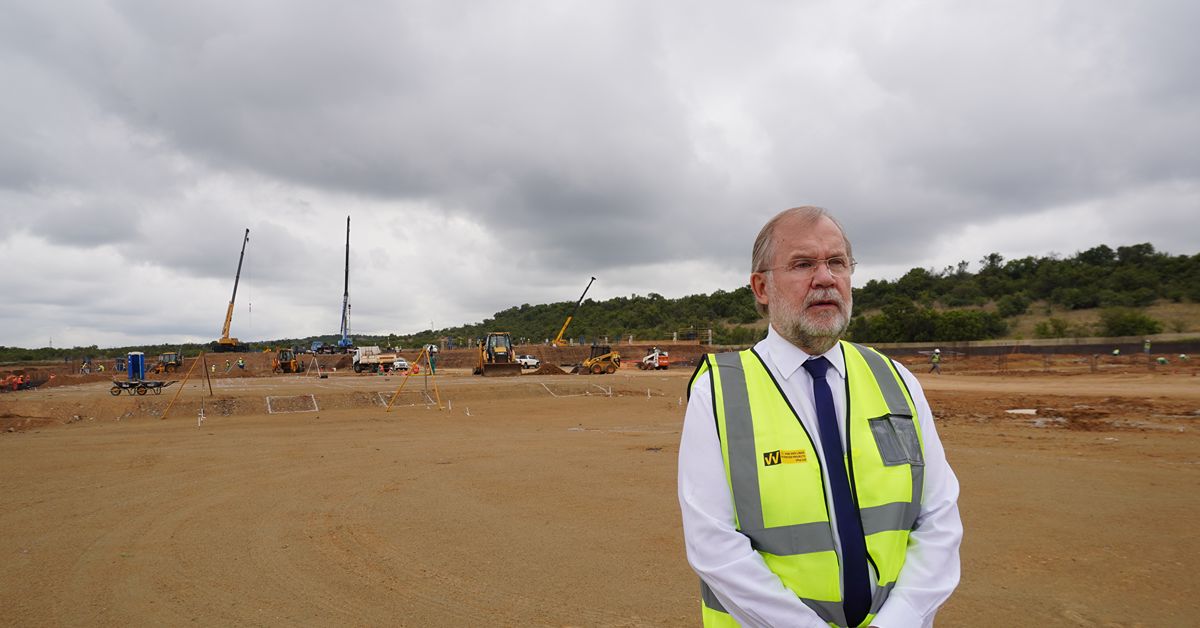
The Solidarity Movement’s project to build the cultural infrastructure for a free, safe and prosperous future will gain new momentum in January 2026 with the construction of a new campus for our independent university. At the same time, it reaffirms our commitment to local solutions. We build to stay, and stay to build. We are not victims or refugees. Our goal is to build the cultural infrastructure that will enable us to remain here sustainably, allowing us to make a lasting contribution to the well-being of the country and all its people.

ANC a ‘moral superpower’? Ludicrous!


By Werner Human, Head of Operations at the Solidarity Movement

Continue reading “ANC a ‘moral superpower’? Ludicrous!”

Jaco Kleynhans | Mackinac Republican Leadership Conference, Michigan, USA

Ladies and Gentlemen, Chairman Jim Runestad, members of the U.S. House of Representatives, the Michigan Legislature and other political institutions in the U.S. and here in Michigan, distinguished guests,
It is an honor and a privilege to stand before you today at this 36th Mackinac Republican Leadership Conference, a gathering that embodies the unyielding spirit of liberty, resilience, and principled leadership that has defined the Republican movement for generations.
 I serve as the Head of International Liaison for Solidarity a large South African civil rights organization dedicated to protecting the rights, dignity, and future of minorities – particularly the Afrikaner minority – in a nation that increasingly seems bent on erasing our culture and identity.
But before I delve into the heart of my message, I must address a shadow that looms over us all, a stark reminder of the perils we face in this global battle for conservative values. Just last week, on a day that should have been filled with the promise of discourse and debate in the great state of Utah, we lost Charlie Kirk—a brilliant, fearless voice for the next generation of conservatives – to a cowardly assassination. His death was not merely a personal tragedy; it was a chilling escalation in the wave of violent rhetoric and actions targeted at conservative voices everywhere. From the streets of America to the town halls of Europe, and yes, even to the farmlands of my own country, South Africa, the enemies of freedom are emboldened. They chant slogans of hate, they incite division, and they strike without remorse.
As Afrikaners in South Africa, we will forever be grateful to Charlie Kirk and his huge contribution to focusing the world’s eyes on the murders of farmers in South Africa and the escalatingattack on the future of my people. Together with President Donald Trump and others, Kirk did great work over the past few years to tell the truth of what is happening in South Africa. Thank you, Charlie. We salute you! For now,and forever.
In South Africa, the toxic leftwing rhetoric has a name and a tune: “Kill the Boer, Kill the Farmer.” It is not some relic of the past; it is sung openly at political rallies, chanted by leaders who hold the reins of power, and echoed in the halls of government.
Thank you for giving me this platform to speak,not just for South Africa, but for all minorities under siege in a world that increasingly tolerates authoritarianism in the name of “progress.” Today, I want to focus on why South Africa matters to you – to America, to the Republican cause, and to the free world.
Let us begin with why South Africa is so crucially important to the United States, and why the Afrikaners, as a beleaguered minority, must be central to any American strategy in Africa. South Africa is not merely another country on the map; it is the economic powerhouse of the continent, commanding vast reserves of critical minerals that power everything from your smartphones to electric vehicles and defense systems. We hold over 80% of the world’s platinum supply and significant portions of manganese and vanadium, key to steel production and battery technology. In a world racing toward green energy and technological dominance, South Africa’s resources are a geopolitical goldmine. Losing influence here means ceding ground to authoritarian adversaries such as China.
But beyond these resources, South Africa is America’s gateway to Africa. With a sophisticated financial system and a G20 membership, we bridge the Global North and the emerging markets of the Global South. Trade between our nations exceeds $20 billion annually, supporting jobs in manufacturing, agriculture, and services across both countries.
Yet this partnership is fraying under the weight of South Africa’s internal decay and external alignments. America needs a stable, pro-Western South Africa to counter the spread of communism and authoritarianism on the continent. Without it, China’s Belt and Road Initiative will swallow Africa whole, Russia’s Wagner mercenaries will destabilize more regimes, and Iran’s proxies will find safe havens for mischief.
Now, why Afrikaners specifically? As a minority of about 2.5 million – roughly 5% of South Africa’s population – we represent a cultural and ideological bulwark against the tide of radicalism sweeping our land. We are conservatives at heart: family-oriented, entrepreneurial, religious, and committed to private property, rule of law, and individual liberty. Our values align seamlessly with the Republican ethos – think self-reliance, like the pioneers of the American West, or the unyielding faith of the Founding Fathers. Historically, Afrikaners have been the stewards of South Africa’s agricultural heartland, producing 90% of the country’s food despite owning only a fraction of the land. We are the innovators in tech and engineering who keep the lights on and the doctors, teachers, and entrepreneurs who built modern South Africa. Marginalizing us does not just harm a minority; it undermines the very stability America needs in Africa. Supporting Afrikaners means bolstering a pro-American, pro-freedom force that can help reclaim the continent for democracy.
To understand our importance, one must know our background—a story of perseverance, innovation, and tragedy that mirrors the American journey in many ways. The Afrikaners trace our roots to the 17th century, when Dutch settlers arrived at the Cape of Good Hope, establishing a refreshment station for the Dutch East India Company. These were hardy Protestants—farmers, craftsmen, and traders—fleeing religious persecution in Europe, muchlike the Pilgrims who landed at Plymouth Rock. These Dutch settlers intermarried with French Huguenots and Germans and forged a unique identity; the Afrikaans language, a blend of Dutch and local tongues, became our voice; the Calvinist faith was our compass.
In the 19th century, as British imperial ambitions encroached, we embarked on the Great Trek – a mass migration inland of over 12,000 pioneers seeking freedom from colonial overreach. Our pioneer forefathers carved out republics such asthe Orange Free State and Transvaal, fighting epic battles against Zulu warriors at Blood River in 1838 and later against the British in the Anglo-Boer Wars of 1880 and 1899-1902.
The British were the first to use concentration camps during war, and during the Anglo Boer War of 1899 to 1902 most of our Afrikaner women and children were placed inconcentration camps by the English. More than 34 000 women and children perished in those concentration camps in some of the worst conditions you could ever imagine.
But after the war, we decided to forgive. We decided to move forward. We built a nation on the principle of self-determination, inventing technologies like the world’s first heart transplant in 1967 and pioneering conservation efforts that protected Africa’s wildlife.
Coming to the second topic: South Africa since 1994, and how the liberal Western vision of a “rainbow nation” has crumbled under the weight of ANC governance. When Nelson Mandela walked free from prison in 1990 and became president in 1994, the world hailed it as a miracle. The end of apartheid promised unity – a rainbow nation where black, white, brown, and Indian people could coexist in harmony. Western liberals, from Bill Clinton to Tony Blair, poured in billions in aid and investment, betting on reconciliation, affirmative action, and a mixed economy to heal old wounds.
For a brief, shining moment during the 1990’s it worked. Under Jacob Zuma from 2009 to 2018, “state capture” siphoned billions from public coffers—funds meant for housing, schools, and hospitals vanished into private jets and mansions. Eskom, our state power utility, was looted, leading to rolling blackouts that crippled industry. The ANC’s cadre deployment – placing loyalists in key positions – prioritized politics over competence, turning bureaucracies into fiefdoms. Racial quotas under Black Economic Empowerment (BEE) laws sidelined skilled workers, regardless of merit, fostering resentment and inefficiency.
At the commencement of President Cyril Ramaphosa’s tenure in 2018, the damage was irreversible. Unemployment soared above 30%, youth joblessness hit 60%, and inequalityworsened. The “rainbow” faded as tribalism and populism rose: the Economic Freedom Fighters (EFF), led by Julius Malema, openly calls for nationalizing everything, from all farmland to all financial institutions and mines. They advocate for land seizures, chanting “Kill the Boer” at rallies. Liberal ideals of meritocracy and non-racialism have been sacrificed on the altar of revenge politics. The ANC destroyed South Africa not through malice alone, but through incompetence masked as transformation. What was promised as upliftment became exploitation; what was envisioned as unity devolved into division. The West’s blind faith in this model – ignoring warning signs of socialism- left us a failed experiment, a cautionary tale for America as you grapple with your own progressive overreach.
This brings us to the third focus point: where South Africa stands today. As an increasinglyfailed state, service delivery has collapsed. Water shortages affect 40% of households; potholed roads and collapsing bridges symbolize infrastructure decay. Rolling power outages have been a reality in South Africa for the past 15 years. The brain drain is real: over a million South Africans, many Afrikaners, have emigrated since 1994, taking their expertise to Australia, Canada, and yes, America.
Land expropriation without compensation, enshrined in the 2018 ANC policy and accelerated under Ramaphosa with a new expropriation act signed late last year.
Racial laws and discrimination against minorities are rampant. BEE mandates high percentages of black ownership in companies, often through shady deals that enrich elites while excluding whites, Indians, and brown people from jobs and contracts. Affirmative action quotas fill universities and civil service with underqualified candidates, sidelining merit.
Crime is an epidemic: over 27,000 murders are committed annually – the highest in the world outside war zones. But farm attacks stand outas a special scourge against rural whites. Since 1994, over 3,000 farmers have been killed in brutal assaults involving torture, rape, and execution-style murders. Today there are less than 30,000 commercial farmers left in South Africa who must feed a growing population of more than 60 million.
Farm attacks and murders are not random robberies; they are ethnically motivated, with attackers targeting isolated homesteads, stealing little but inflicting maximum terror. The government downplays it, claiming it is mere crime, but the patterns—disproportionate violence against white farmers—tell another story. As President Trump rightly noted, it is a crisis demanding international attention.
Finally, our foreign policy has veered dangerously toward authoritarian embrace. South Africa, under ANC influence, has warmed to China, Russia, and Iran, aligning with BRICS to counter the West. In 2023, South Africahosted joint naval exercises with Russia and China in the Indian Ocean codenamed “Mosi”,signaling military cooperation amid Russia’s Ukraine invasion.
With Iran, ties deepened in 2025: high-level military talks in Tehran discussed hosting Iranian naval flotillas in our ports, and the South African government defended Iran’s nuclear ambitions at the UN. Ramaphosa’s government abstained from condemning Russia’s aggression and sued Israel at the ICJ over Gaza, earning praise from Tehran.
In February 2025, President Donald J. Trump issued Executive Order 14204, titled “Addressing Egregious Actions of the Republic of South Africa.” This landmark decree declared it U.S. policy to oppose South Africa’s human rights violations, particularly against white Afrikaners, and its undermining of international norms. It suspended foreign aid – over $500 million annually – until reforms are made. It also created a fast-track refugee program for persecuted Afrikaner farmers and professionals.
Since February, a bill was approved in the http://U.S.House of Representatives Committee on Foreign Affairs, further implementing President Trump’s executive order and even suggesting that targeted sanctions be imposed on ANC officials involved in corruption and land grabs. We support this proposal and hope that the act will soon be approved by the full House and the Senate so that President Trump can sign it.
President Trump’s reciprocal tariffs in April 2025 hit South African exports such as steel and agricultural products, retaliating against our BRICS alignments. Our fear now is that the tariffs are punishing the people closest to the U.S., such as Afrikaner farmers. We want to make a plea to the U.S. to lower the tariffs and instead focus on punitive measures against the South African government and radical anti-American politicians.
Within this crisis lies opportunity: strained relations can be leveraged for change. America holds the cards: market access, military aid, and diplomatic clout. By supporting Solidarity and civil society, the U.S. can empower pro-Western voices, pressure the ANC toward accountability, and reclaim South Africa as a strategic ally. I repeat: Please do not punish your friends, such as Afrikaner farmers, with tariffs. Punish the real scoundrels who have acted, and continue to act,against American interests!
In conclusion, my friends, South Africa’s story is one of promises betrayed but not yet lost. The assassination of Charlie Kirk reminds us that violence against our ideas is real, but so is our resolve. The chants of “Kill the Boer” echo the global assault on freedom, but with leaders like President Trump, we have hope.
I urge you: Pressure your government to enforce the executive order fully. Shine a light on farm murders and corruption. Support South African civil society with donations, media reports and access to a platform where we can share our views.
We ask you to counter South Africa’s drift toward tyrants by strengthening ties with true partners like us. Together, we can rebuild a South Africa that honors all its people – a beacon of liberty in Africa, allied with the greatest nation on earth, the United States of America. God bless you, God bless the Republican Party, God bless the great people of Michigan, God bless the Afrikaner people at the southern tip of Africa and God bless the enduring spirit of freedom. Thank you.
  • Watch the broadcast here.
Inleiding
Hoofstuk 1
Hoofstuk 2
Hoofstuk 3
Hoofstuk 5
Hoofstuk 7
Hoofstuk 8
Hoofstuk 12
Hoofstuk 15
Hoofstuk 16
Hoofstuk 17
Hoofstuk 19
Hoofstuk 20
Hoofstuk 21
Hoofstuk 22
Hoofstuk 23
Hoofstuk 25
Hoofstuk 27
Hoofstuk 28
Hoofstuk 31
Hoofstuk 32
Hoofstuk 34
Slot

Geskiedenisfonds

ʼn Fonds wat help om die Afrikanergeskiedenis te bevorder.

FAK

Die Federasie van Afrikaanse Kultuurvereniginge (FAK) is reeds in 1929 gestig. Vandag is die FAK steeds dié organisasie wat jou toelaat om kreatief te wees in jou taal en kultuur. Die FAK is ’n toekomsgerigte kultuurorganisasie wat ’n tuiste vir die Afrikaanse taal en kultuur bied en die trotse Afrikanergeskiedenis positief bevorder.

Solidariteit Helpende Hand

Solidariteit Helpende Hand fokus op maatskaplike welstand en dié organisasie se groter visie is om oplossings vir die hantering van Afrikanerarmoede te vind.

Solidariteit Helpende Hand se roeping is om armoede deur middel van gemeenskapsontwikkeling op te los. Solidariteit Helpende Hand glo dat mense ʼn verantwoordelikheid teenoor mekaar en teenoor die gemeenskap het.

Solidariteit Helpende Hand is geskoei op die idees van die Afrikaner-Helpmekaarbeweging van 1949 met ʼn besondere fokus op “help”, “saam” en “ons.”

Forum Sekuriteit

Forum Sekuriteit is in die lewe geroep om toonaangewende, dinamiese en doeltreffende privaat sekuriteitsdienste in

Suid-Afrika te voorsien en op dié wyse veiligheid in gemeenskappe te verhoog.

AfriForumTV

AfriForumTV is ʼn digitale platform wat aanlyn en gratis is en visuele inhoud aan lede en nielede bied. Intekenaars kan verskeie kanale in die gemak van hul eie huis op hul televisiestel, rekenaar of selfoon verken deur van die AfriForumTV-app gebruik te maak. AfriForumTV is nóg ʼn kommunikasiestrategie om die publiek bewus te maak van AfriForum se nuus en gebeure, maar ook om vermaak deur films en fiksie- en realiteitsreekse te bied. Hierdie inhoud gaan verskaf word deur AfriForumTV self, instellings binne die Solidariteit Beweging en eksterne inhoudverskaffers.

AfriForum Uitgewers

AfriForum Uitgewers (voorheen bekend as Kraal Uitgewers) is die trotse uitgewershuis van die Solidariteit Beweging en is die tuiste van Afrikaanse niefiksie-, Afrikanergeskiedenis- én prima Afrikaanse produkte. Dié uitgewer het onlangs sy fokus verskuif en gaan voortaan slegs interne publikasies van die Solidariteit Beweging publiseer.

AfriForum Jeug

AfriForum Jeug is die amptelike jeugafdeling van AfriForum, die burgerregte-inisiatief wat deel van die Solidariteit Beweging vorm. AfriForum Jeug berus op Christelike beginsels en ons doel is om selfstandigheid onder jong Afrikaners te bevorder en die realiteite in Suid-Afrika te beïnvloed deur veldtogte aan te pak en aktief vir jongmense se burgerregte standpunt in te neem.

De Goede Hoop-koshuis

De Goede Hoop is ʼn moderne, privaat Afrikaanse studentekoshuis met hoë standaarde. Dit is in Pretoria geleë.

De Goede Hoop bied ʼn tuiste vir dinamiese studente met Christelike waardes en ʼn passie vir Afrikaans; ʼn tuiste waar jy as jongmens in gesonde studentetradisies kan deel en jou studentwees met selfvertroue in Afrikaans kan uitleef.

Studiefondssentrum

DIE HELPENDE HAND STUDIETRUST (HHST) is ʼn inisiatief van Solidariteit Helpende Hand en is ʼn geregistreerde openbare weldaadsorganisasie wat behoeftige Afrikaanse studente se studie moontlik maak deur middel van rentevrye studielenings.

Die HHST administreer tans meer as 200 onafhanklike studiefondse namens verskeie donateurs en het reeds meer as 6 300 behoeftige studente se studie moontlik gemaak met ʼn totaal van R238 miljoen se studiehulp wat verleen is.

S-leer

Solidariteit se sentrum vir voortgesette leer is ʼn opleidingsinstelling wat voortgesette professionele ontwikkeling vir professionele persone aanbied. S-leer het ten doel om werkendes met die bereiking van hul loopbaandoelwitte by te staan deur die aanbieding van seminare, kortkursusse, gespreksgeleenthede en e-leer waarin relevante temas aangebied en bespreek word.

Solidariteit Jeug

Solidariteit Jeug berei jongmense voor vir die arbeidsmark, staan op vir hul belange en skakel hulle in by die Netwerk van Werk. Solidariteit Jeug is ʼn instrument om jongmense te help met loopbaankeuses en is ʼn tuiskomplek vir jongmense.

Solidariteit Regsfonds

ʼn Fonds om die onregmatige toepassing van regstellende aksie teen te staan.

Solidariteit Boufonds

ʼn Fonds wat spesifiek ten doel het om Solidariteit se opleidingsinstellings te bou.

Solidariteit Finansiële Dienste (SFD)

SFD is ʼn gemagtigde finansiëledienstemaatskappy wat deel is van die Solidariteit Beweging. Die instelling se visie is om die toekomstige finansiële welstand, finansiële sekerheid en volhoubaarheid van Afrikaanse individue en ondernemings te bevorder. SFD doen dit deur middel van mededingende finansiële dienste en produkte, in Afrikaans en met uitnemende diens vir ʼn groter doel aan te bied.

Ons Sentrum

Die Gemeenskapstrukture-afdeling bestaan tans uit twee mediese ondersteuningsprojekte en drie gemeenskapsentrums, naamlik Ons Plek in die Strand, Derdepoort en Volksrust. Die drie gemeenskapsentrums is gestig om veilige kleuter- en/of naskoolversorging in die onderskeie gemeenskappe beskikbaar te stel. Tans akkommodeer die gemeenskapsentrums altesaam 158 kinders in die onderskeie naskoolsentrums, terwyl Ons Plek in die Strand 9 kleuters en Ons Plek in Volksrust 16 kleuters in die kleuterskool het.

Skoleondersteuningsentrum (SOS)

Die Solidariteit Skoleondersteuningsentrum (SOS) se visie is om die toekoms van Christelike, Afrikaanse onderwys te (help) verseker deur gehalte onderrig wat reeds bestaan in stand te (help) hou, én waar nodig nuut te (help) bou.

Die SOS se doel is om elke skool in ons land waar onderrig in Afrikaans aangebied word, by te staan om in die toekoms steeds onderrig van wêreldgehalte te bly bied en wat tred hou met die nuutste navorsing en internasionale beste praktyke.

Sol-Tech

Sol-Tech is ʼn geakkrediteerde, privaat beroepsopleidingskollege wat op Christelike waardes gefundeer is en Afrikaans as onderrigmedium gebruik.

Sol-Tech fokus op beroepsopleiding wat tot die verwerwing van nasionaal erkende, bruikbare kwalifikasies lei. Sol-Tech het dus ten doel om jongmense se toekomsdrome met betrekking tot loopbaanontwikkeling deur doelspesifieke opleiding te verwesenlik.

Akademia

Akademia is ’n Christelike hoëronderwysinstelling wat op ’n oop, onbevange en kritiese wyse ’n leidinggewende rol binne die hedendaagse universiteitswese speel.

Akademia streef daarna om ʼn akademiese tuiste te bied waar sowel die denke as die hart gevorm word met die oog op ʼn betekenisvolle en vrye toekoms.

AfriForum Publishers

AfriForum Uitgewers (previously known as Kraal Uitgewers) is the proud publishing house of the Solidarity Movement and is the home of Afrikaans non-fiction, products related to the Afrikaner’s history, as well as other prime Afrikaans products. The publisher recently shifted its focus and will only publish internal publications of the Solidarity Movement from now on.

Maroela Media

Maroela Media is ʼn Afrikaanse internetkuierplek waar jy alles kan lees oor dit wat in jou wêreld saak maak – of jy nou in Suid-Afrika bly of iewers anders woon en deel van die Afrikaanse Maroela-gemeenskap wil wees. Maroela Media se Christelike karakter vorm die kern van sy redaksionele beleid.

Kanton Beleggingsmaatskappy

Kanton is ʼn beleggingsmaatskappy vir eiendom wat deur die Solidariteit Beweging gestig is. Die eiendomme van die Solidariteit Beweging dien as basis van die portefeulje wat verder deur ontwikkeling uitgebrei sal word.

Kanton is ʼn vennootskap tussen kultuur en kapitaal en fokus daarop om volhoubare eiendomsoplossings aan instellings in die Afrikaanse gemeenskap teen ʼn goeie opbrengs te voorsien sodat hulle hul doelwitte kan bereik.

Wolkskool

Wolkskool is ʼn produk van die Skoleondersteuningsentrum (SOS), ʼn niewinsgewende organisasie met ʼn span onderwyskundiges wat ten doel het om gehalte- Afrikaanse onderrig te help verseker. Wolkskool bied ʼn platform waar leerders 24-uur toegang tot video-lesse, vraestelle, werkkaarte met memorandums en aanlyn assessering kan kry.

Ajani

Ajani is ‘n privaat geregistreerde maatskappy wat dienste aan ambagstudente ten opsigte van plasing by werkgewers bied.

Ajani is a registered private company that offers placement opportunities to artisan students in particular.

Begrond Instituut

Die Begrond Instituut is ʼn Christelike navorsingsinstituut wat die Afrikaanse taal en kultuur gemeenskap bystaan om Bybelse antwoorde op belangrike lewensvrae te kry.

Sakeliga

ʼn Onafhanklike sake-organisasie

Pretoria FM en Klankkoerant

ʼn Gemeenskapsgebaseerde radiostasie en nuusdiens

Saai

ʼn Familieboer-landbounetwerk wat hom daarvoor beywer om na die belange van familieboere om te sien deur hul regte te beskerm en te bevorder.

Ons Winkel

Ons Winkels is Solidariteit Helpende Hand se skenkingswinkels. Daar is bykans 120 winkels landwyd waar lede van die publiek skenkings van tweedehandse goedere – meubels, kombuisware, linne en klere – kan maak. Die winkels ontvang die skenkings en verkoop goeie kwaliteit items teen bekostigbare pryse aan die publiek.

AfriForum

AfriForum is ʼn burgerregte-organisasie wat Afrikaners, Afrikaanssprekende mense en ander minderheidsgroepe in Suid-Afrika mobiliseer en hul regte beskerm.

AfriForum is ʼn nieregeringsorganisasie wat as ʼn niewinsgewende onderneming geregistreer is met die doel om minderhede se regte te beskerm. Terwyl die organisasie volgens die internasionaal erkende beginsel van minderheidsbeskerming funksioneer, fokus AfriForum spesifiek op die regte van Afrikaners as ʼn gemeenskap wat aan die suidpunt van die vasteland woon. Lidmaatskap is nie eksklusief nie en enige persoon wat hom of haar met die inhoud van die organisasies se Burgerregte-manifes vereenselwig, kan by AfriForum aansluit.